· Sunday Crochet
In this article
01 · A small craft can make room for a different kind of day02 · Why people enjoy learning to crochet03 · Is crocheting calming? What the research can tell us04 · How to start crocheting without buying too much05 · Common questions06 · Start with curiosity, not a perfect planA small craft can make room for a different kind of day
Crochet turns a strand of yarn into something you can hold, use, wear, or give away. That simple change,from watching a screen to making a row of stitches,can feel surprisingly satisfying. You don't need artistic training, a big budget, or a plan to make a perfect blanket. A hook, yarn, and a little curiosity are enough to find out whether the craft suits you.
I’ll show you how I’d make the first steps easy: what crochet offers, what you actually need to begin, and how to find a teaching style that makes sense to you.
Why people enjoy learning to crochet
It gives your hands a job and your attention somewhere to go
Crochet is a hands-on hobby with a visible rhythm. You focus on the yarn, the hook, and the next stitch; gradually, a small piece of fabric appears. For many people, that offers a welcome change from scrolling or switching between tabs. It is not a rule that every moment should be productive, and crochet does not have to replace screen time. It can simply be one more way to spend a quiet part of the day.
There is also a natural pause built into learning. At first, you may stop to check where the hook goes or replay an instruction. With practice, familiar movements begin to feel less effortful, and you can pay attention to the color and texture taking shape. Some crocheters enjoy that steady repetition; others prefer the challenge of a new stitch or a more involved project. Both are perfectly good reasons to pick up a hook.
You can make things that feel personal
A few basic skills open the door to many kinds of projects: plush toys, accessories, clothing, blankets, and pieces for the home. You can choose colors that suit your room, adjust a wearable to your taste, or make a small handmade gift. Even a simple swatch has a purpose when you are learning: it lets you see the stitches and get comfortable handling the yarn.
Making an item yourself can also help you think more carefully about what you want to own and keep. A handmade garment might be chosen for a particular color or fit. That does not automatically make every handmade item more sustainable; the yarn, how often you use the piece, and whether it lasts all matter. The satisfying part is being able to make deliberate choices instead of picking from a shelf.
Progress is easy to see
A first attempt may look uneven. That is normal: your hands are learning to coordinate a new tool and material, and your tension will change as you practice. Each attempt gives you a little more information. You start to notice the loops, spot where a stitch belongs, and understand why a demonstration pauses at a certain point.
The goal is not to make your first project look like an expert sample. Choose one small thing to learn, let the early work be practice, and notice what is easier the next time. Finishing something,even a modest sample,can feel rewarding because you watched it take shape one stitch at a time.
There is a community if you want one
Crochet is easy to share. People meet in local yarn shops, libraries, craft circles, and online groups to swap ideas, ask questions, and show what they are making. You can participate actively, ask for help, or simply follow along until you feel comfortable. There is no membership test and no need to post your work.
Different crocheters hold a hook in different ways and learn from different explanations. A group can help you see those variations and remind you that one person's comfortable method does not have to become yours.
Is crocheting calming? What the research can tell us
Many people describe crochet as relaxing, but that experience varies. A 2020 international survey of 8,391 people who crocheted found that respondents often reported positive feelings after crocheting, including feeling calmer or happier. It was a survey of people's own experiences, so it cannot show that crochet caused those feelings or that it treats anxiety. The participants also chose to take part, which may mean they were more interested in crochet than the general population. The study is best read as a record of what many crocheters said they experienced.
A separate study of adults aged 70 to 89 found an association between some late-life cognitive leisure activities, including crafts such as knitting and quilting, and lower odds of mild cognitive impairment. It did not test crochet as a treatment or prove that craft activities prevent cognitive decline. The research is an interesting reason to study creative activity further, not a health promise.
If crochet feels pleasant to you, enjoy that. If it feels frustrating, tiring, or uncomfortable, take a break or try another activity. Keep your shoulders relaxed, use enough light to see your stitches, and stop if your hands hurt. Crochet can be part of a satisfying routine, but it is not a substitute for professional health care.
How to start crocheting without buying too much
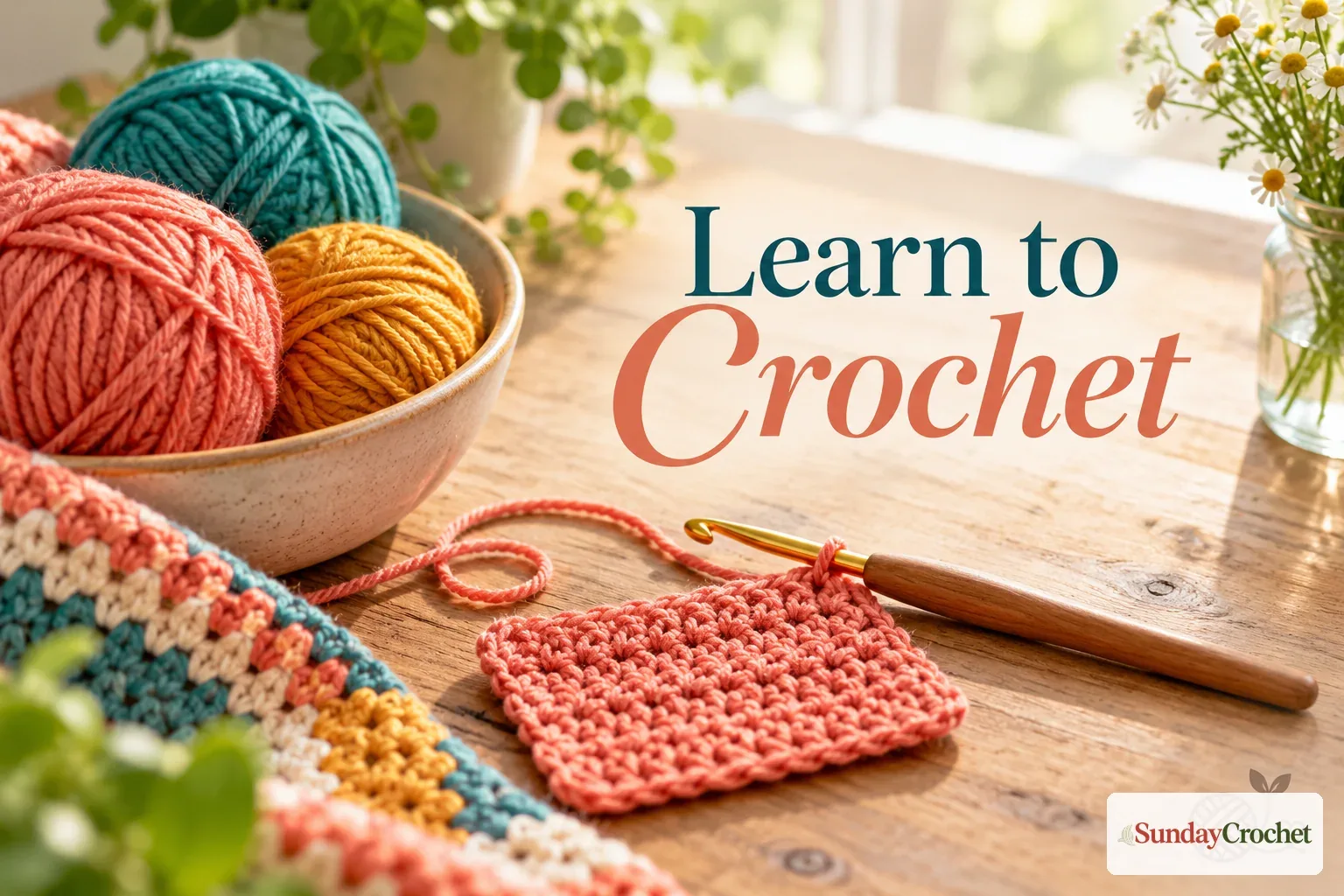
You don't need a full kit to discover whether you enjoy crochet. Start with one hook and one ball of yarn, then add supplies only when a project calls for them.
Choose a visible yarn and a comfortable hook
For a first practice session, a bright yarn makes the loops easier to see than black yarn. Acrylic is a common beginner choice because it is widely available and often inexpensive. You can learn with other fibers too; for a comparison of how acrylic, cotton, and wool differ, the guide to choosing yarn for crochet can help when you are ready to compare.
A hook around 5, 6, or 7 mm is a reasonable place to look, but don't choose by size alone. Check the yarn label for its suggested hook range and match your hook to that yarn. A larger hook and a thicker yarn can make the stitches easier to see, though very large tools are not necessary for everyone. If the label recommends a different size, follow it for that yarn rather than treating one number as universal.
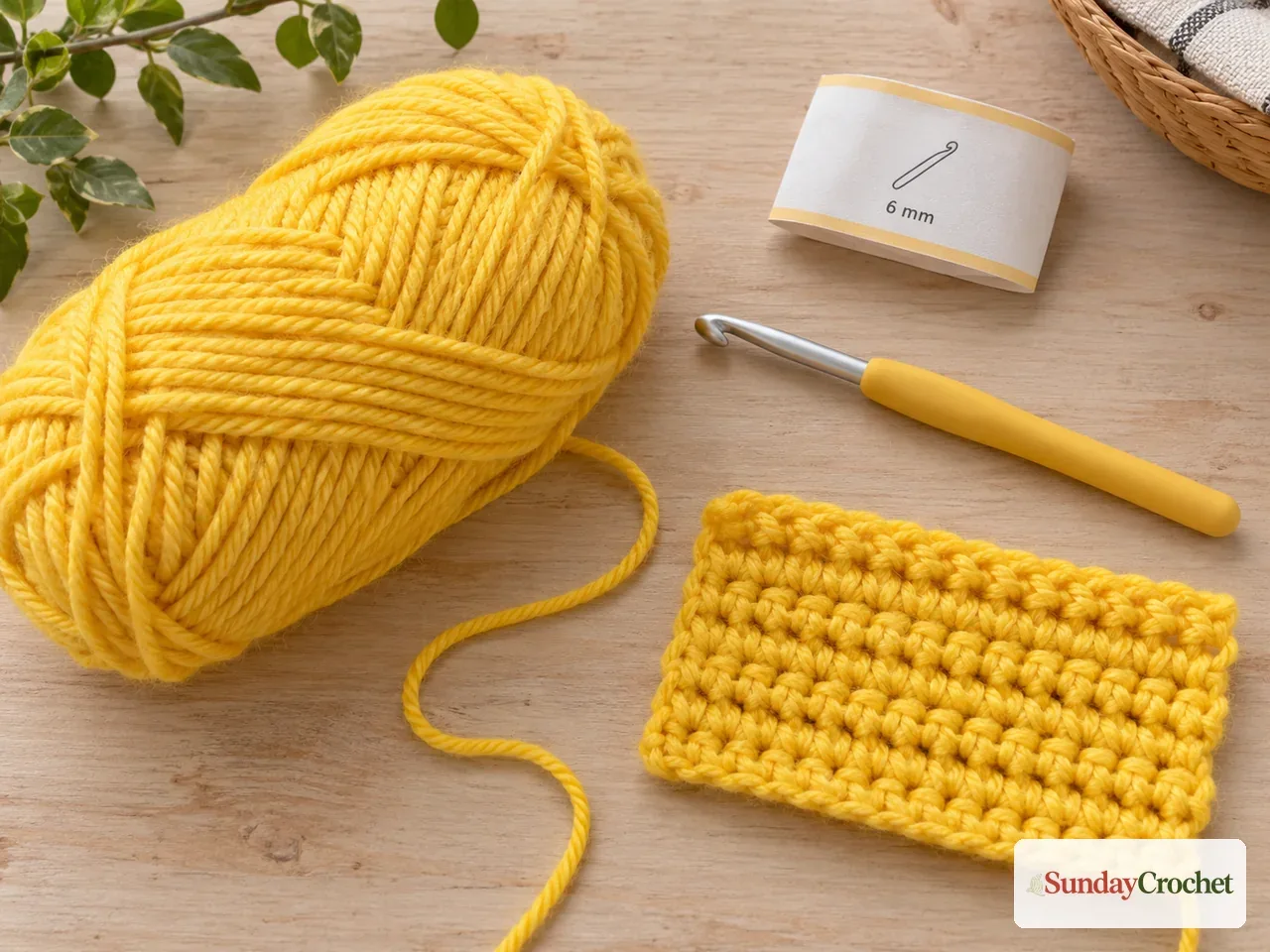
You can begin with just those two items. Scissors are useful for cutting yarn when you finish a practice piece, but you don't need to buy a basket of notions before you know what you like. As you choose projects, the yarn label becomes a helpful guide to fiber, care, and hook recommendations; learning to read a yarn label makes those details less mysterious.
Find a tutorial that matches how you learn
Video lessons are useful because you can watch the hook and yarn move, pause, and repeat a section. But no single teacher or grip works for everyone. Try a few explanations if the first one leaves you puzzled. Some tutorials move slowly and name each motion; others show the work from closer up or assume you already know a stitch.
If you are left-handed, search for a left-handed demonstration or a lesson that explains how to mirror the movement. If the teacher holds the hook differently from you, pay attention to the stitch itself and use the grip that feels steady in your own hand. It may take a little searching to find a clear view and a comfortable pace.
When you want to practice the first stitches, follow a structured lesson such as crochet for absolute beginners. Having one beginner-friendly reference nearby can make it easier to focus on the movement rather than trying to memorize everything at once.
Make the first goal small
Pick one thing to practice rather than planning an ambitious project before you know the basics. You might work on the movement shown in your chosen beginner lesson and repeat it until it feels more familiar. Pause, rewind, and check the demonstration whenever you lose track. There is no need to rush through a session or finish a particular amount.
As the stitches become easier to see, you can decide what you want to make next. If you are not sure, browse simple projects and choose one whose materials and steps feel manageable. A first project is a learning experience, not a test of your talent. The beginner guide covers the first techniques, while the yarn and hook guides can help you choose supplies for a specific project.
Common questions
Do I need to be artistic to learn crochet?
No. Crochet uses repeatable movements that you can learn with practice. A sense of color or design may grow as you make things, but you do not need to arrive with drawing skills or a background in art. Follow a clear demonstration, be patient with the first attempts, and let your preferences develop as you go.
Is crochet an expensive hobby?
It can be inexpensive to try. A single hook and one affordable ball of yarn are enough for a first practice session. Costs rise when you choose specialty fibers, collect tools, or start larger projects, so begin with a small amount and buy for the project in front of you. Check the yarn label before choosing a hook so you do not buy a size that doesn't suit your yarn.
What if I don't find crochet relaxing?
That is okay. New movements can feel awkward, and a complicated tutorial may be tiring. Try a clearer lesson, change the pace, or put the work down for now. Some people enjoy crochet as a calming routine; others are drawn to the finished objects, the challenge, or the social side. You do not need to enjoy every part of it for the craft to be worthwhile.
Can crochet help with anxiety or memory?
Some crocheters report that it helps them feel calmer, and research has explored creative leisure activities and wellbeing. The available survey evidence records self-reported experiences, while the cognitive study found an association rather than proof of cause and effect. Crochet is not a treatment for anxiety or a proven way to prevent memory problems. If you have concerns about your health, speak with a qualified professional.
Start with curiosity, not a perfect plan
Crochet is worth trying if you like the idea of making something slowly, learning with your hands, or having a creative activity to return to. Keep the first purchase modest: a visible yarn, a hook that suits its label, and a tutorial whose pace works for you. Practice one movement, give yourself permission to make imperfect stitches, and see how it feels. You can decide what to make,and how far to take the hobby,after that first small start.