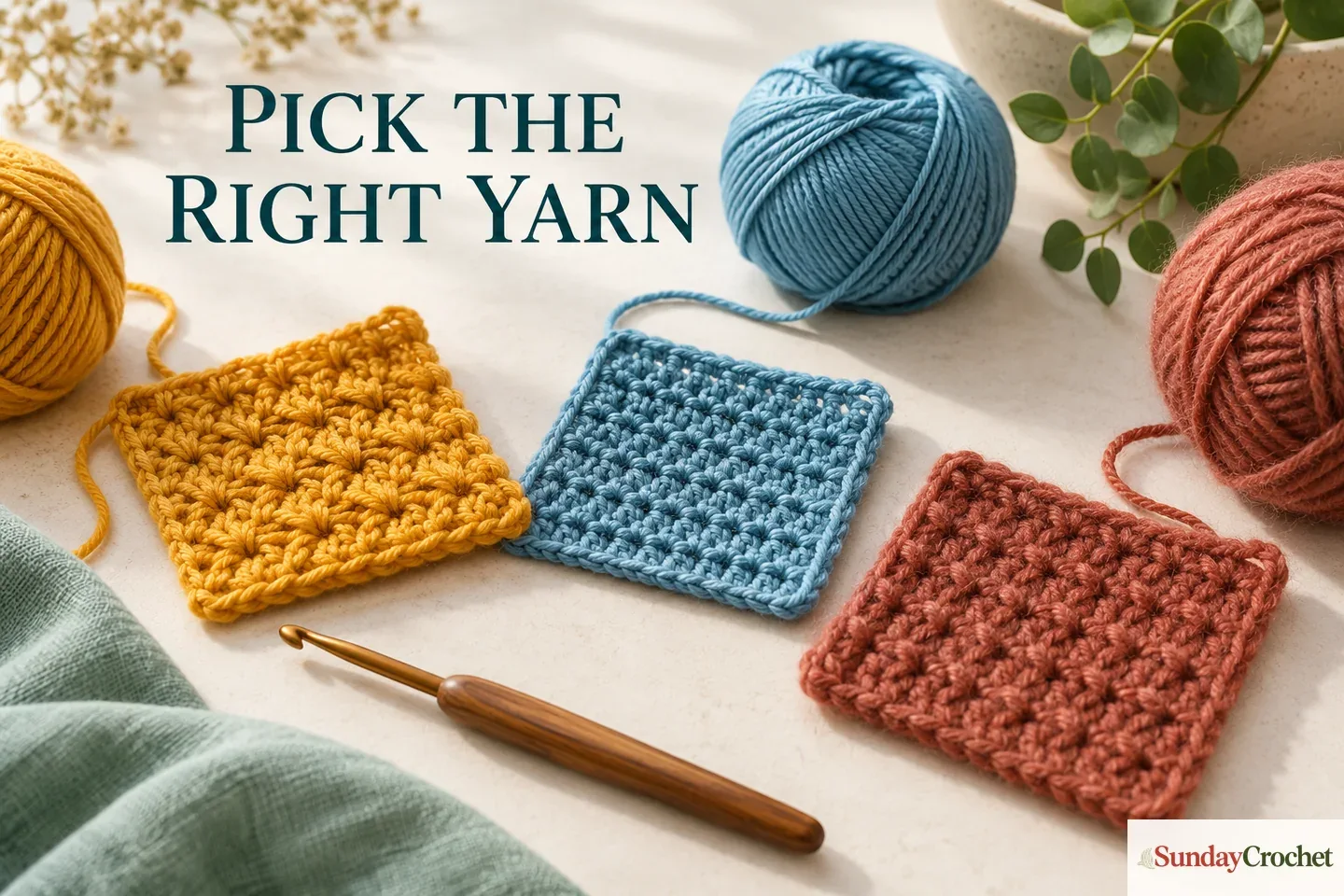
The best fiber depends on the fabric and use you have in mind. · Sunday Crochet
In this article
01 · Cotton, acrylic, or wool: start with the finished fabric02 · At a glance: the main differences03 · Cotton yarn: crisp stitches and a steadier fabric04 · Acrylic yarn: accessible, colorful, and easy to compare05 · Wool yarn: warmth and bounce, with care in mind06 · Match the fiber to the project07 · How I test a yarn before starting08 · Common questions09 · Make the choice with a swatchCotton, acrylic, or wool: start with the finished fabric
Two skeins can share a yarn-weight number and still feel completely different in your hands. One may make a cool, crisp market bag; another a soft blanket that drapes over your knees. The fiber is one reason. It affects how the yarn feels, how clearly stitches show, how much the fabric stretches, and what care the finished piece may need.
When you search for cotton versus acrylic yarn for crochet, you are usually trying to choose a material for a particular project. There is no single winner. Cotton, acrylic, and wool each solve different problems, and blends add even more possibilities.
I’ll show you how I choose. I start with what the finished item needs to do, then compare the yarn label and make a small swatch before committing. That quick process is more reliable than picking a fiber by reputation alone.
At a glance: the main differences
| Fiber | Often useful for | What to keep in mind |
|---|---|---|
| Cotton | Dishcloths, warm-weather pieces, bags, and defined stitch patterns | It often has less spring than wool, so fabric can feel firm or grow under weight |
| Acrylic | Blankets, practice pieces, colorful accessories, and affordable everyday projects | Heat sensitivity, pilling, and feel vary by yarn; check care instructions |
| Wool | Warm garments, cozy accessories, and projects that benefit from bounce | Some wool can felt with heat and agitation; care depends on treatment and label |
These are starting points, not rules. A cotton blend can behave differently from a firm 100% cotton, and superwash wool is treated differently from untreated wool. The yarn’s twist, ply, finish, and construction also change how the stitches look and feel.
Cotton yarn: crisp stitches and a steadier fabric
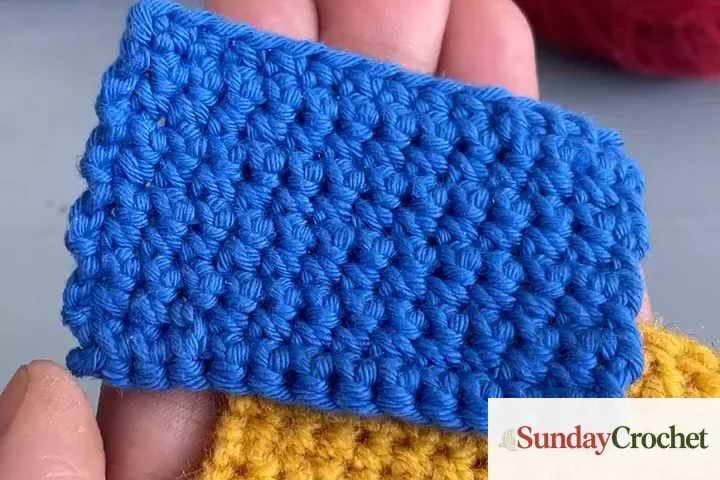
Cotton is a plant fiber. In crochet, many cotton yarns show stitch detail clearly: you can see the loops and the strand structure, which makes texture and colorwork easy to inspect. Mercerized cotton has been treated to give it a smoother, sometimes shinier surface and may take dye differently from unmercerized cotton.
Cotton often has less elastic recovery than wool. If you stretch it, it may not spring back as readily. That quality can be useful when you want a firm shape, but a heavy cotton garment or bag can lengthen with wear. It is one reason to make a swatch and handle it before deciding on a larger piece.
I like cotton as a candidate for dishcloths, market bags, baskets, plant holders, and summer tops. The right choice still depends on the yarn and design: a loose tote made from a slippery cotton blend may sag, while a denser stitch can help the same fiber hold its shape.
Cotton is also a sensible option to investigate for items used near warmth, but do not assume every cotton project is safe for a hot pan or direct flame. The yarn may include synthetic fibers, and the fabric itself can be thin or open. For heat protection, follow instructions specifically written for that purpose and use suitable materials; never rely on fiber content alone for safety.
For garments, notice how the swatch hangs. If it feels stiff, try a different stitch or a yarn with more drape before changing the hook dramatically. A larger hook can open the fabric, but it also changes the gauge and dimensions. Compare your measured swatch with the pattern’s gauge before you decide.
Acrylic yarn: accessible, colorful, and easy to compare
Acrylic is a manufactured fiber and is widely available in many colors and price ranges. That can make it a convenient option for learning, larger blankets, and projects where you need to buy more yarn in a consistent category. Some acrylics are soft and smooth; others feel stiffer or develop pills more quickly. The label and a small sample tell you more than the word “acrylic” by itself.
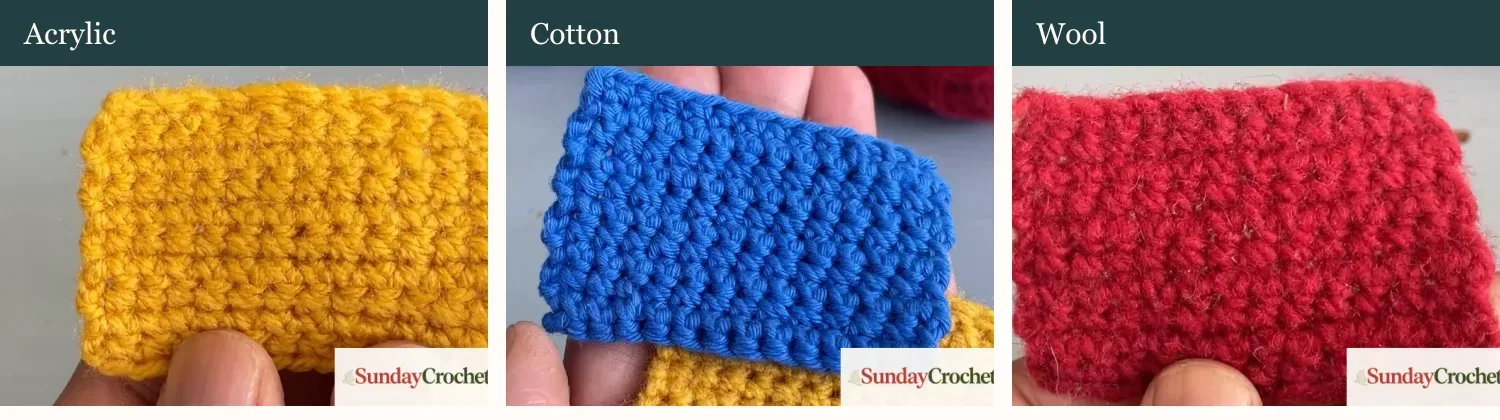
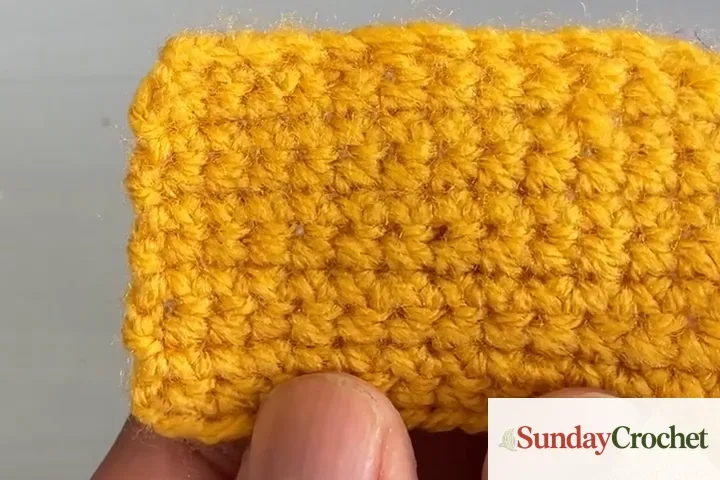
The golden swatch shown here is compact and easy to read. Another acrylic yarn could look quite different because yarn weight, twist, and hook size all affect the fabric. If you are still learning your stitches, choose a smooth, light-colored yarn that lets you see the tops of the stitches clearly. Acrylic can work well for practice, and you can review the beginner crochet steps if you want a refresher on the basic fabric.
Check the care symbols rather than assuming every acrylic skein can be washed and dried the same way. Repeated friction can cause pilling in many yarns, and heat can damage acrylic fibers. Keep acrylic away from hot cookware and open flame; it is not a suitable choice for a potholder that must protect your hand from heat. For ordinary garments and blankets, use the instructions printed on the band and wash a swatch first if you are uncertain about how the fabric will respond.
If you are buying several balls, compare the shade and dye-lot information. Even when a color name matches, separate dye batches can look slightly different beside each other. The yarn-label guide explains where to find the length, fiber content, care, and dye-lot details you need for that check.
Wool yarn: warmth and bounce, with care in mind
Wool comes from animal fibers. The word covers many kinds of yarn, and softness, warmth, elasticity, and care vary with the animal fiber, spinning, blend, and finish. Compared with many cotton yarns, wool often has more bounce. That spring can help a fabric recover after stretching and can make ribbing or textured stitches feel lively.
Wool is a useful candidate for hats, scarves, sweaters, and other pieces where warmth and elasticity matter. The red swatch in the comparison has a soft halo around the stitches; that is a visible feature of this sample, not a promise that every wool yarn will look fuzzy. Smooth wool yarns can show crisp stitch definition too.
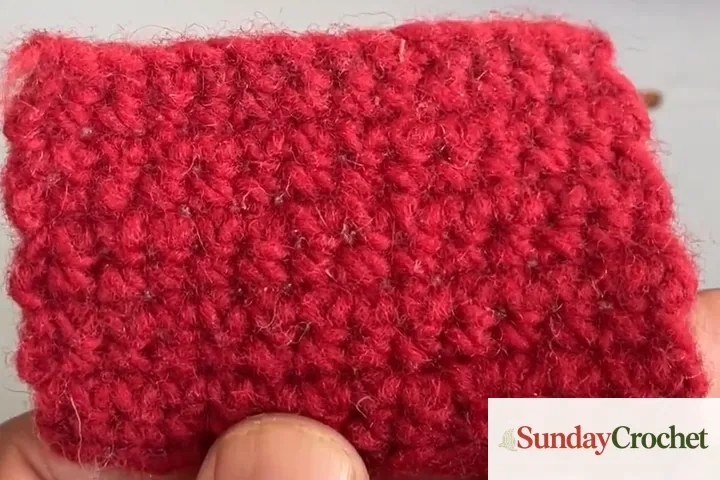
Care deserves attention. Some untreated wool can felt and shrink when heat, moisture, and agitation work together. Other wool is labeled superwash or has a different care recommendation. Read the label for the specific ball you have; do not assume all wool must be hand washed or that all superwash yarn can tolerate any machine setting.
When the label calls for gentle handling, avoid sudden changes in temperature and rough agitation. To dry a wet wool garment, support its weight so it does not stretch, shape it as directed, and dry it flat when the care instructions recommend that method. Follow the yarn and pattern guidance rather than treating one wool sample as a universal rule.
Match the fiber to the project
Before you pick up a skein, write down what matters most for the finished piece. Is it meant to be warm, cool, firm, soft, washable, or structured? Will it touch skin, carry weight, or be handled often? That short list helps you compare materials without getting distracted by a color you love but cannot use comfortably.
For a blanket
Think about weight, softness, care, and how the blanket will be used. Acrylic may be convenient for an everyday throw, while wool may offer warmth and spring. Cotton can make a cooler, weightier blanket. Check the yardage and care label, then make a swatch large enough to judge the fabric in your hands. A blanket that feels pleasantly soft as a small square may become heavy across a full bed.
For a bag or basket
Shape and stretch matter. Cotton is often a good place to start for a firm tote or basket, especially with a dense stitch. A soft acrylic or wool blend may relax more under the weight of the contents. Work a sample, tug it gently, and consider how the finished piece will be loaded. If you need a very structured bag, the pattern’s stitch and construction are just as important as the fiber.
For clothing
Comfort against skin, drape, warmth, and care all count. A wool or wool blend may suit a warm sweater, while cotton can feel appropriate for a lighter top. Acrylic can be comfortable too, depending on the specific yarn and the wearer. Hold the swatch against your skin for a little while and see how it feels. If the fabric is itchy or stiff at swatch size, finishing the garment is unlikely to make that discomfort disappear.
For a potholder or trivet
Do not choose based on “natural” versus “synthetic” alone. Avoid acrylic for an item expected to protect hands from hot cookware because it can be damaged by heat. Cotton is commonly used in kitchen textiles, but a crocheted potholder is only protective when its yarn, thickness, and construction are suitable for that task. A decorative trivet is not automatically safe as a potholder.
How I test a yarn before starting
You do not need a complicated experiment. A small sample can answer the questions that matter for your project.
- Read the label. Check the fiber percentages, yarn category, length, suggested hook, gauge, care symbols, and dye lot. For help separating the thickness category from the amount in the ball, see the crochet yarn-weight guide.
- Make a swatch with the project stitch. If the pattern gives a gauge, make a sample larger than the stated measurement so you can measure the center without counting the edge. Use the pattern’s hook first.
- Measure and handle it. Record stitches and rows over the stated area. Notice whether the fabric feels soft or firm, drapes or stands up, and springs back or stays stretched.
- Try the care method on the sample. Follow the label, then compare the dry swatch with the original. This helps you see whether the texture, size, or drape changes before you wash a finished garment.
- Choose with the pattern in view. Keep the yarn if its fiber, gauge, fabric, and care suit the project. If it misses the pattern gauge, adjust the hook and swatch again, or choose a different yarn category if the fabric itself is wrong.
Keep your sample and its label together. If you like how it behaves after washing and drying, you have a useful reference when you buy the remaining balls or return to the project later.
Common questions
Is cotton or acrylic better for crochet?
Neither is best for every project. Cotton often gives clear stitches and a less springy fabric; acrylic is widely available and comes in many colors and finishes. Choose according to the finished item’s use, feel, care needs, and pattern gauge.
Is cotton yarn good for beginners?
It can be. Cotton’s clear stitch definition makes it easier to see individual loops, though some cotton yarns feel firm and have less stretch. A smooth, light-colored yarn in a comfortable thickness is often easier to learn with than a dark or highly textured one.
Can I substitute acrylic for cotton?
Sometimes, but matching the yarn-weight category is only the first check. Compare the pattern gauge, fiber feel, drape, stretch, and care. Crochet and wash a swatch before making the full project, especially for fitted clothing or an item that needs to hold a specific shape.
Is wool always hand wash only?
No. Care depends on the yarn and its treatment. Some wool labels call for hand washing, while some superwash products have machine-washing instructions. Follow the band for the exact yarn and use a gentle method that matches it.
Which yarn makes the softest crochet fabric?
Fiber alone cannot answer that. Softness changes with the fiber blend, spinning, finishing, and the way the yarn feels against your skin. Touch the skein and, when possible, make a swatch before choosing yarn for a wearable.
Make the choice with a swatch
When I narrow down yarn, I return to three questions: does the fabric suit the project, does it feel good in use, and can I care for it the way the label asks? Cotton, acrylic, and wool each offer useful qualities, but the specific yarn and stitch decide how those qualities show up.
Start with the label, make a small sample, and see how it behaves. That little square gives you a clearer answer than the fiber name alone—and it can save you from discovering halfway through a project that the fabric is too stiff, too stretchy, or too warm for the job.