· Sunday Crochet
In this article
01 · A winter wardrobe made by hand02 · Start with the layer you will wear most03 · Sweaters: warmth, texture, and shape04 · Cardigans: the easiest layer to adjust05 · Vests: warmth without bulky sleeves06 · Accessories for quick, useful warmth07 · Choosing yarn for a real winter layer08 · Fit and finishing make the difference09 · A simple plan for your winter makesA winter wardrobe made by hand
Winter crochet wearables can be as simple as a warm hat or as ambitious as a roomy cardigan. The best handmade layers do more than look cozy. They fit over the clothes you already wear, feel comfortable through a full day, and use stitch texture and yarn weight with a clear purpose. A useful winter wardrobe can grow one piece at a time: start with an accessory, add a vest or pullover, then work toward a larger layer when you are ready.
I’ll show you how I think through these ideas, from choosing the right kind of garment to making the yarn, texture, and fit work together. This is an inspiration guide rather than a row-by-row pattern, so use the silhouettes and details as a starting point when you choose a pattern that provides its own measurements and instructions.
Start with the layer you will wear most
Before choosing a stitch, think about where the garment will sit in your winter routine. A sweater worn under a coat needs a different shape from a cardigan you plan to pull over a T-shirt at home. If you spend time outdoors, a scarf, beanie, or mittens may be the most useful first project. If you want a piece that changes an outfit, a vest or open cardigan adds warmth without covering every layer beneath it.
Consider the clothes you already reach for. A fitted top works well under a vest, while a relaxed sweater needs room through the body and sleeves. A long cardigan can cover a tunic or dress, but a cropped shape may sit more neatly over high-waisted pants. The goal is not to make every piece oversized. It is to leave enough ease for the way you intend to layer it.
It also helps to choose one project that fits the time you have. A scarf or hat gives you a smaller commitment and a chance to test a yarn. A sweater or cardigan takes longer, especially when it has sleeves, ribbing, buttons, or several panels. Starting a large garment early makes the finishing less rushed when cold weather arrives.
Sweaters: warmth, texture, and shape
A winter pullover can feel substantial because of its yarn, its stitch pattern, or both. Chunky yarn worked into a dense fabric creates a bold, warm layer quickly, while a lighter yarn with a raised or textured stitch can give a sweater depth without as much bulk. Think about the coat you will wear over it. A very thick sweater may be comfortable indoors but too snug beneath a fitted jacket.
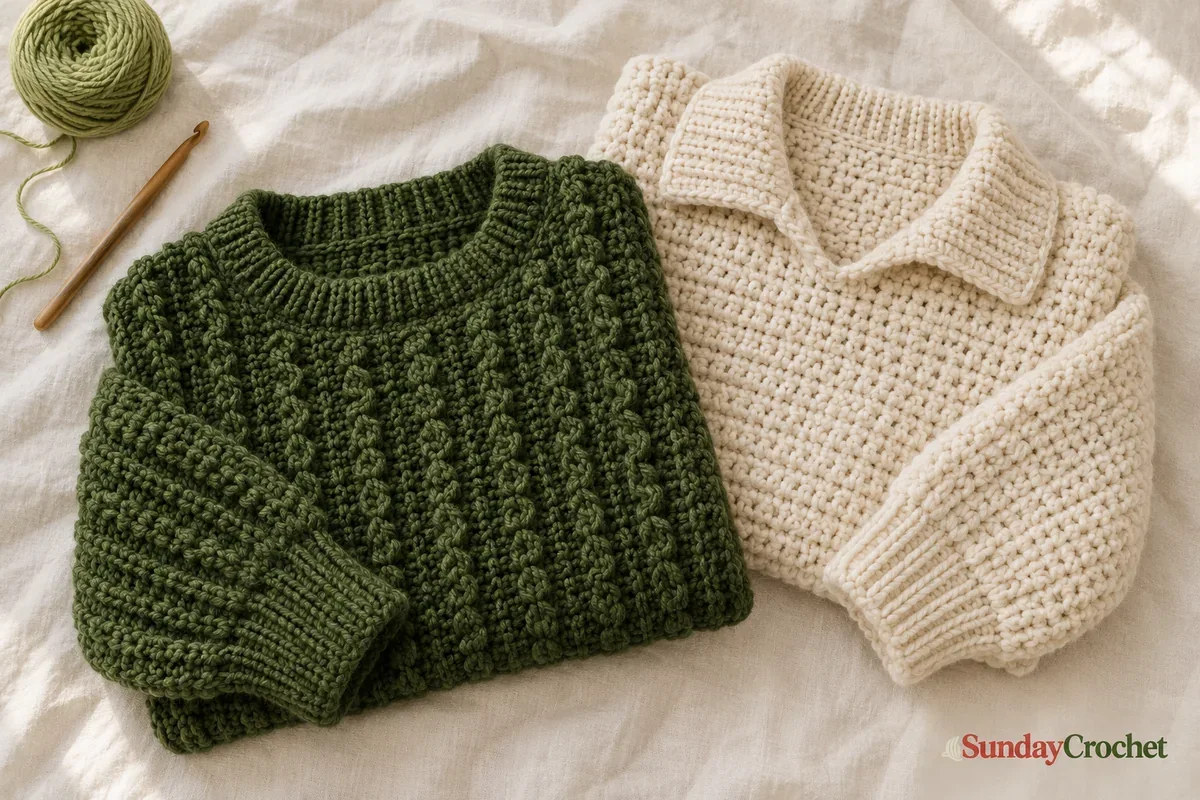
Texture can change the whole mood of a simple silhouette. Alpine-style texture gives a surface a raised, rhythmic look. Granny-style stitch patterns can make an open, graphic fabric, especially when color changes through the yarn. Vertical ribbing creates a column-like texture and can make cuffs, hems, and collars feel defined. A folded collar or turned cuffs add a little structure around the face and hands.
Construction matters as much as appearance. A top-down raglan grows from the neckline and allows you to try on the body as you work, while a sweater made from separate panels gives you pieces to join and finish. A wrap-style front or poncho-like shape offers more room and can sit over a base layer. These are different approaches, so check a pattern's construction and size range before buying yarn. Try-on opportunities are useful, but they do not replace checking the pattern's gauge and finished measurements.
If you like color, decide whether you want broad stripes, a variegated yarn that changes on its own, or a repeating motif such as granny squares. A single strong color can make textured stitches easier to see. Variegated yarn adds movement, but it can hide a detailed stitch pattern. When both the stitch and the color are busy, the fabric may look less defined than either idea would on its own.
Cardigans: the easiest layer to adjust
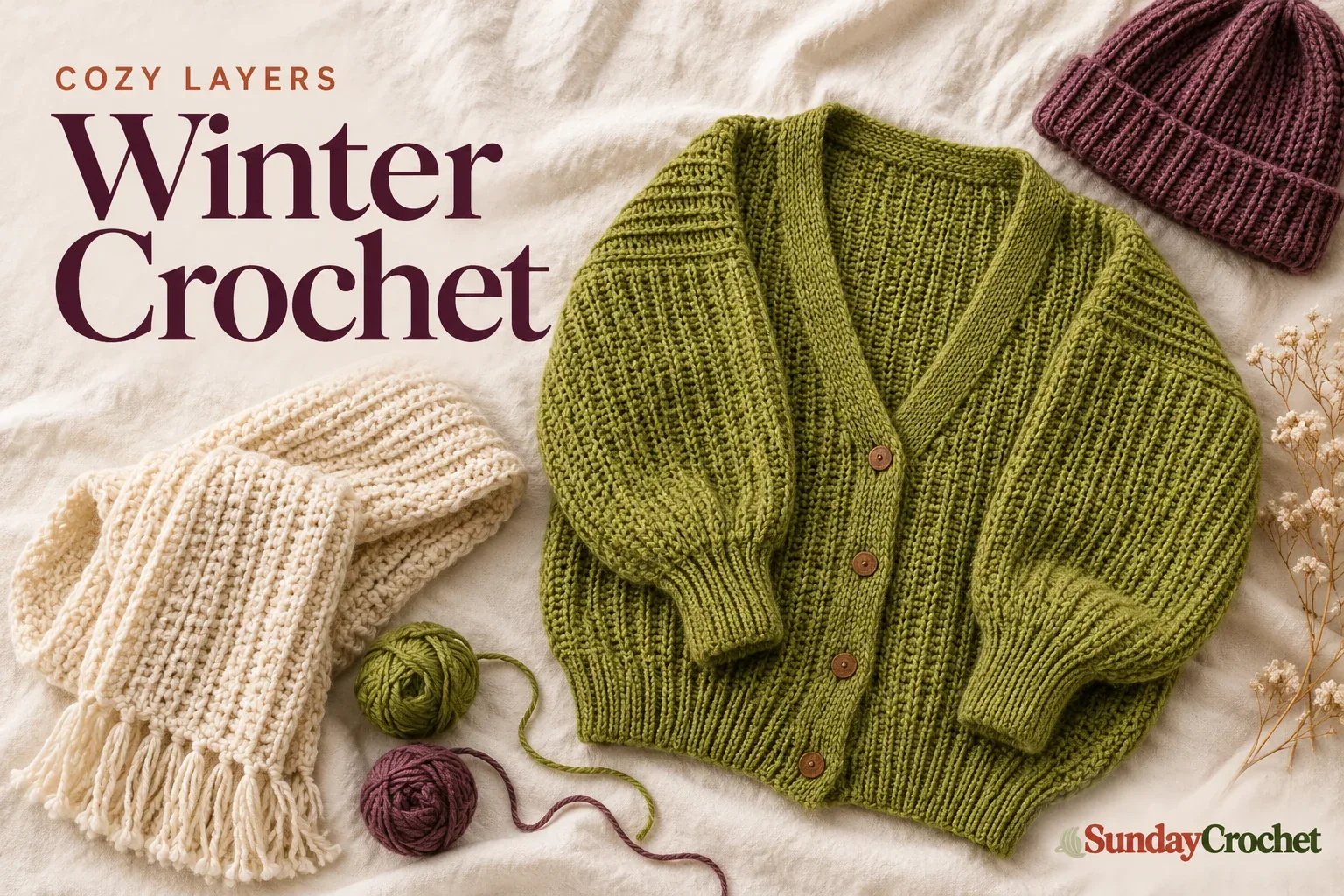
A cardigan is a flexible winter piece because it opens at the front. You can wear it over a thin shirt indoors, leave it open for a relaxed shape, or close it when you need more warmth. A classic button-front cardigan is easy to style, and wooden buttons bring a natural accent to a solid color. An oversized cardigan with a lower neckline feels casual; a longer, closer-fitting version can become a practical outer layer.
Pay attention to the sleeves and cuffs when comparing shapes. Roomy sleeves create a soft, cozy outline, while narrower sleeves slide more easily beneath a coat. Deep ribbed cuffs help gather the sleeve at the wrist. If the garment is worked in vertical rows, the ribbing and body texture can form a strong visual line from shoulder to hem. A hood adds warmth around the head, though it also adds weight and can bunch beneath a coat collar.
Cardigans can also carry the most stitch variety. A panel-based design may combine simple sections with a cable or textured detail. Granny-stitch fabric gives a more open, motif-like appearance. Mosaic colorwork creates graphic contrast when you want a statement piece. For a first cardigan, a straightforward shape in a solid yarn can make the construction easier to follow. Save multiple color changes and complicated finishing for a project where you are comfortable tracking details.
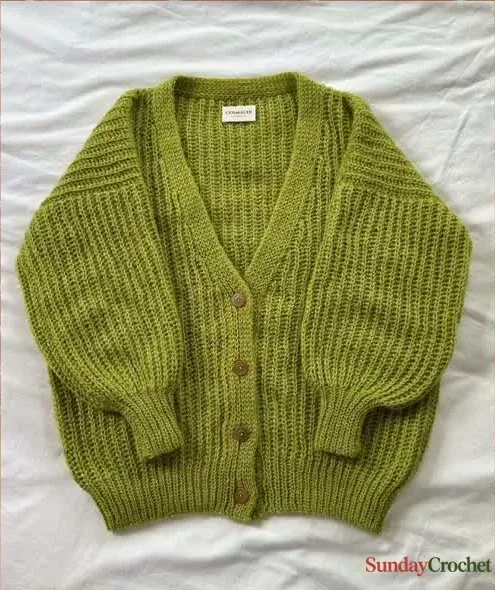
An open-front shape, deep V-neck, and button closure make this cardigan easy to layer.
When you plan a button front, consider the button band and closure before you begin. Check that the finished opening lies flat, and choose buttons that are not so heavy that they pull the fabric out of shape. If you prefer a no-button cardigan, an open front removes that extra finishing step and leaves the fabric free to drape.
Vests: warmth without bulky sleeves
A vest is a good middle layer when a full sweater feels too warm or restrictive. It adds coverage across the torso while leaving the arms free, so it can fit over a long-sleeved shirt or beneath a coat. Ribbing gives a close, structured look at the neckline and hem. A V-neck makes room for a collar or shirt beneath it, while a rounded neckline feels softer and more enclosed.
The fabric can be plain and ribbed or built around a more visible texture. Diamond motifs, alternating stitch bands, and small raised details add interest without changing the basic sleeveless shape. Cropped vests work well over longer shirts, while a longer hem can give more coverage. Before choosing, compare the garment's finished chest and armhole measurements with a layer you already like. Armholes that are too small can make a vest uncomfortable over sleeves; very deep armholes can cause the body to hang away from the sides.
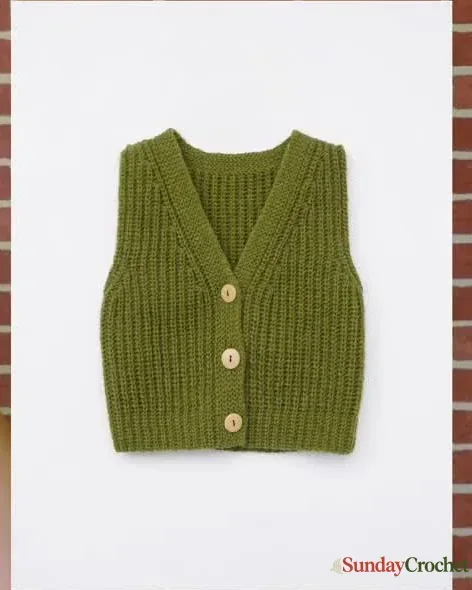
The V-neck and vertical ribbing make this vest a light layer over a long-sleeved top.
Accessories for quick, useful warmth
Accessories make a practical starting point because they are smaller and easier to finish than a garment. A scarf can be narrow and simple for everyday use, or wide enough to wrap as a shawl. Scalloped edges add a soft outline, while a triangle shape can sit around the shoulders. Oversized scarves use more yarn but provide more styling options and coverage.
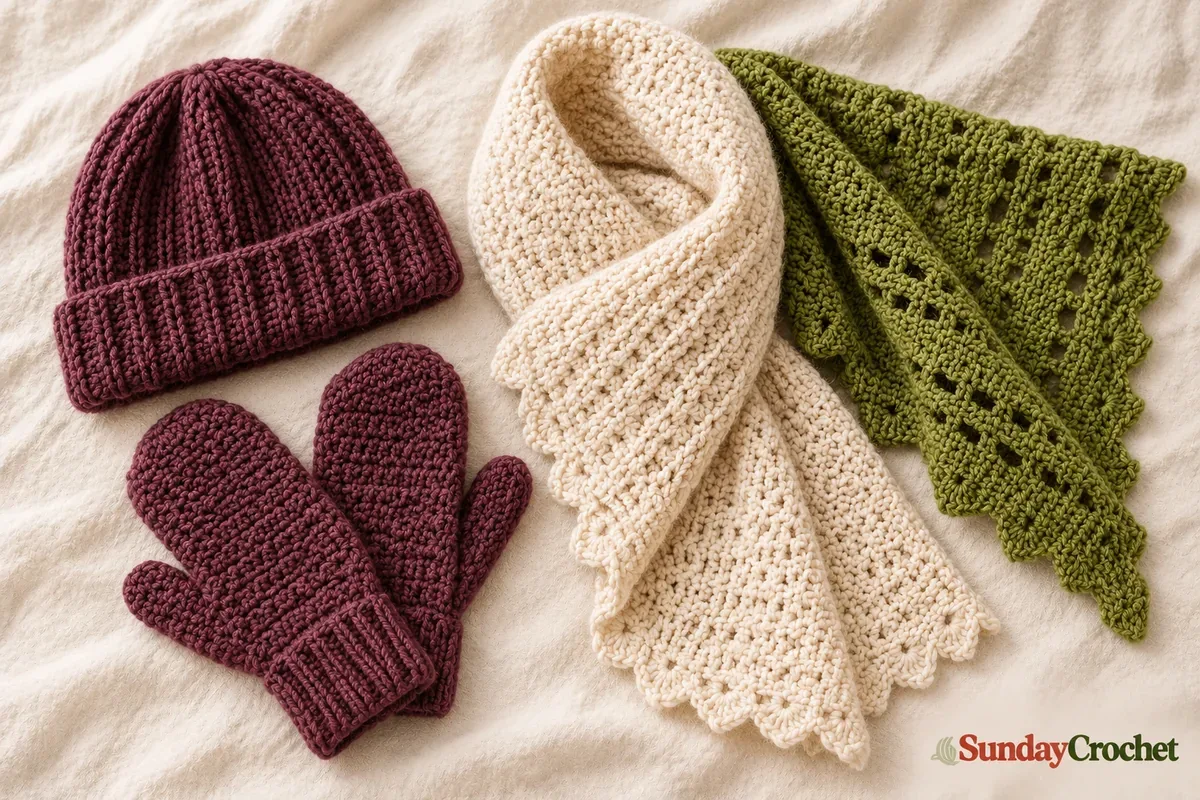
A beanie is another useful winter project. A close-fitting hat with ribbing can stretch to sit securely, while a shaped crown creates a rounded top. Color changes can make a hat playful, but a solid color puts the focus on stitch texture. Check the intended circumference and depth: a hat that is too shallow may not cover the ears, and one that is too loose may slide around.
Mittens are helpful when you want warmth for a walk or commute. Think about whether you need fingers free for everyday tasks or prefer the extra warmth of a mitten shape. Slippers can be cozy at home, but yarn and care instructions matter because feet create friction and the soles take wear. If a pattern calls for a specific fiber treatment or finishing method, follow its instructions and care label instead of assuming every yarn behaves the same way.
Small accessories are also a useful way to test a fiber before committing to a sweater. Make a gauge swatch or a small project with the yarn and hook you plan to use. If the fabric feels stiff, scratchy, or too warm for your intended use, you can change direction before investing many hours and skeins. The differences between cotton and acrylic yarn can help you weigh comfort and care, while understanding how crochet yarn weights affect fabric makes it easier to compare a pattern's recommended yarn with what is available to you.
Choosing yarn for a real winter layer
A warm-looking yarn does not guarantee a comfortable garment. Fiber, thickness, stitch density, and how you will care for the finished piece all matter. Wool often has warmth and resilience, while acrylic is widely available and usually straightforward to wash according to its label. Blends can balance properties. Cotton may feel breathable but can produce a heavier fabric in a dense sweater. Read the ball band and the pattern notes, especially when the garment will be worn often.
For sweaters and cardigans, drape is important. Hold the swatch by one edge and notice whether it hangs softly or stays stiff. A firm fabric may work for a structured vest or outer layer, while a drapier fabric can suit a flowing cardigan. Stitch texture changes drape too: raised stitches and dense ribbing use more yarn and may create a thicker surface than open granny stitches.
Crochet can use more yarn than you expect for a garment, especially with a dense stitch or long sleeves. Use the pattern's yardage estimate as a starting point and account for the size you plan to make. Buy enough yarn from the same dye lot when possible so the color stays consistent. If you plan stripes or colorwork, calculate each color separately where the pattern provides that information.
Fit and finishing make the difference
Measure a sweater or cardigan that already fits the way you want. Compare its chest width, body length, sleeve length, and shoulder shape with the pattern's finished measurements. Ease is the difference between your body measurement and the garment measurement. Positive ease gives room for a relaxed fit or a layer underneath; closer ease creates a neater silhouette. Follow the designer's size chart and notes, because the same label size can fit differently in different constructions.
Make a gauge swatch using the stitch pattern and hook recommended by the pattern. Wash or block it as directed, then measure across the center rather than the edges. If your stitches are too tight, the garment can come out smaller and denser than planned. If they are too loose, it may grow or lose its shape. Adjust hook size and swatch again before starting a large piece.
Finishing deserves time in the plan. Weave in ends securely, join panels carefully, and sew buttons where the band can support them. Blocking can help even out stitches and smooth seams when the yarn and pattern allow it. Use the care instructions for the yarn, and test any washing or blocking method on the swatch first. A neat finish helps the garment keep its shape through repeated wear.
A simple plan for your winter makes
Choose one main garment and one small accessory rather than starting several large pieces at once. Pick the garment around the clothes you want to wear it with, then confirm the pattern's measurements, yarn weight, gauge, and yardage. Make the swatch before buying extra colors or beginning the body. Add the likely finishing time to your schedule, including sleeves, button bands, seams, and ends.
If you are new to wearable crochet, begin with a scarf, hat, or simple vest. These projects teach you about fabric density and sizing without requiring the same amount of shaping as a sweater. When you are ready for a pullover or cardigan, choose a construction and stitch pattern that you can comfortably track. Texture, color, and cozy yarn can make a piece feel special, but a layer you can move in and care for easily is the one most likely to become part of your winter routine.