Blocking can help a square settle into a crisp, even shape. · Sunday Crochet
In this article
01 · What blocking can do for crochet02 · Why block a crochet project?03 · Gather a few simple tools04 · Shape and pin a square05 · Method 1: Wet blocking06 · Method 2: Spray blocking07 · Method 3: Steam blocking08 · Let it dry, then unpin09 · Which blocking method should you choose?10 · Common questions11 · A finishing step you can chooseWhat blocking can do for crochet
Blocking is a way to shape a finished crochet piece so it lies flatter, opens up, or holds a cleaner outline. It can help a square become easier to join, make the stitches in lace more visible, or give a gift a more polished finish. It is optional, though. Not every project needs it, and it is useful to know how the method you choose may interact with your yarn.
I’ll walk you through three common approaches: wet blocking, spray blocking, and steam blocking. We’ll use a granny square to see how to pin and measure a piece, but the same basic idea of setting a shape can be adapted to other crochet. The important part is to make gentle adjustments, let the fabric dry or cool fully, and be especially cautious with heat on acrylic.
Why block a crochet project?
A crocheted motif can curl or pull out of shape as you work. Pinning and shaping it while it dries can encourage the edges to lie flat. For granny squares, consistent shapes can make joining feel easier. A finished blanket may relax into shape under its own weight, so blocking every square is a personal choice rather than a requirement.
Blocking can also open up chain spaces and stitch definition in lace, or help a snowflake and other shaped motifs show their outline. Sometimes the goal is simply a neat finish before gifting or displaying a piece. If your crochet already lies as you like, you can skip blocking.
The method is not guaranteed to be permanent. How well a project holds its shape after washing depends on the fiber and the approach used. The fiber guide compares common yarn choices, and the yarn-label guide explains where to check care information before you add water or heat.
Gather a few simple tools
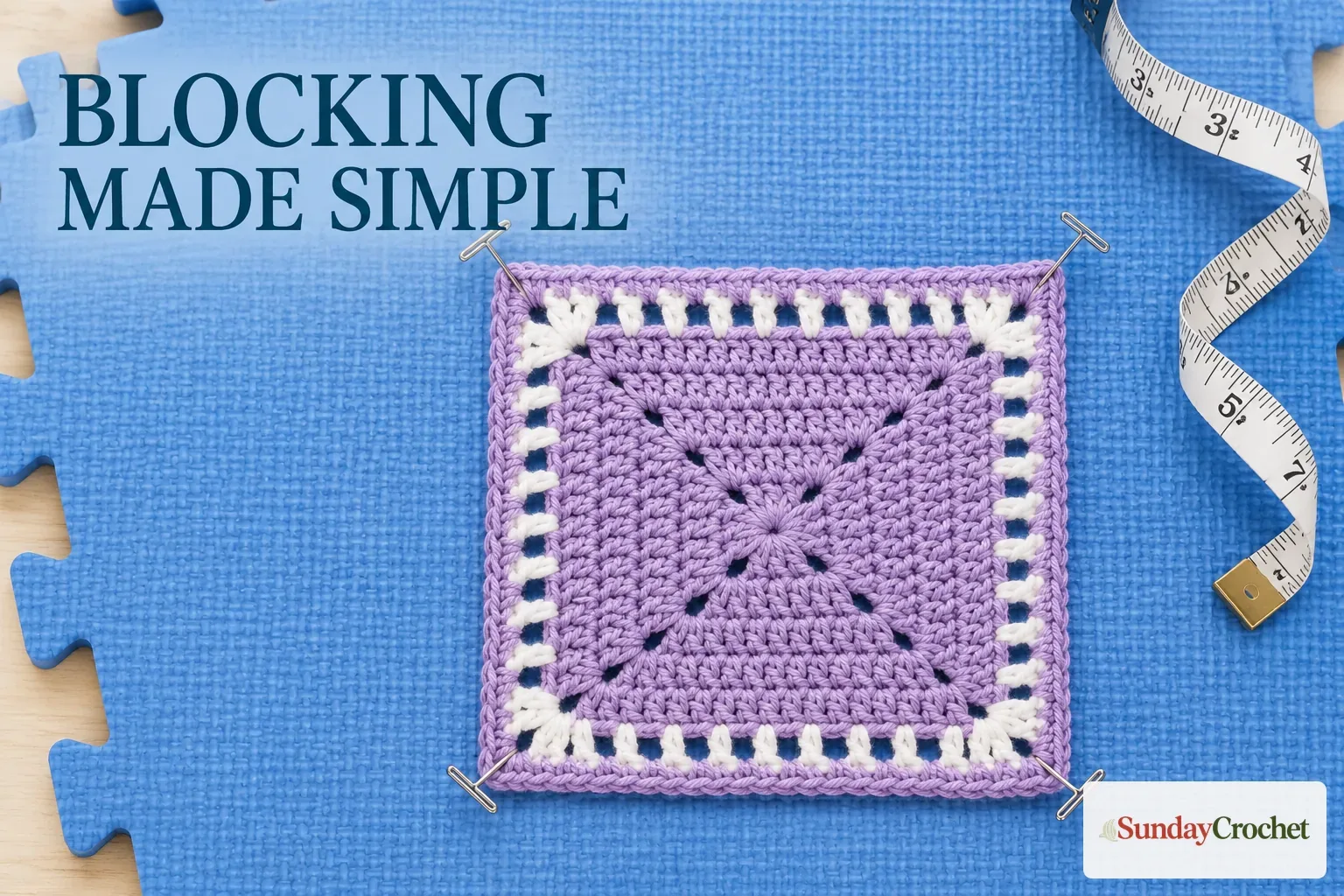
You do not need a specialized blocking board for every project. Interlocking foam mats work well because they hold pins and can be arranged to fit the piece. A carpet may also work if pins can stay in place, but remember the surface underneath may become damp. Choose a setup that is safe for the yarn and the surface below it.
Shape and pin a square
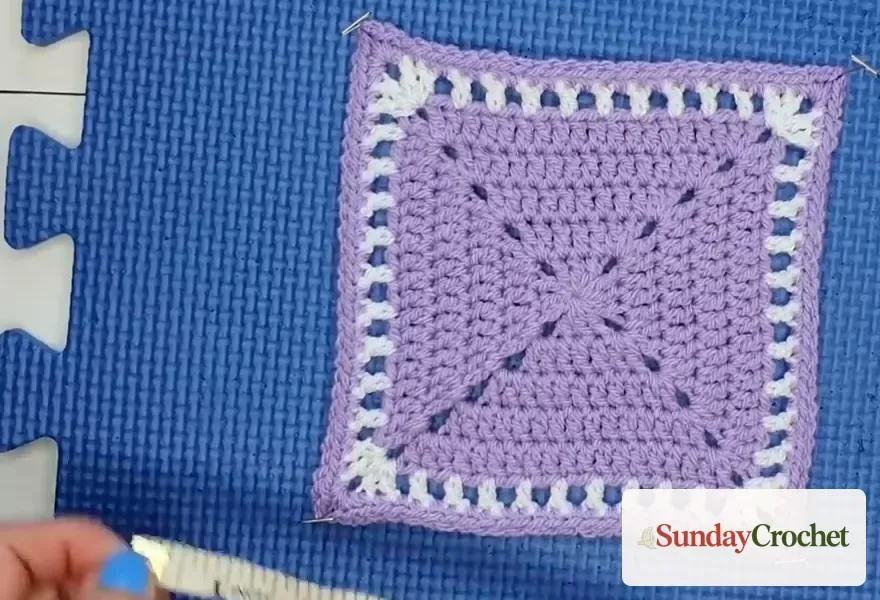
Before choosing one of the three methods, arrange the piece in the shape you want it to dry in. For a square, place it on the mat and secure the four corners first. Use the tape measure to compare the corner-to-corner diagonals, then adjust until the square looks even. The sample shown here measures about six inches on each side; use your own project dimensions rather than treating that as a required size.
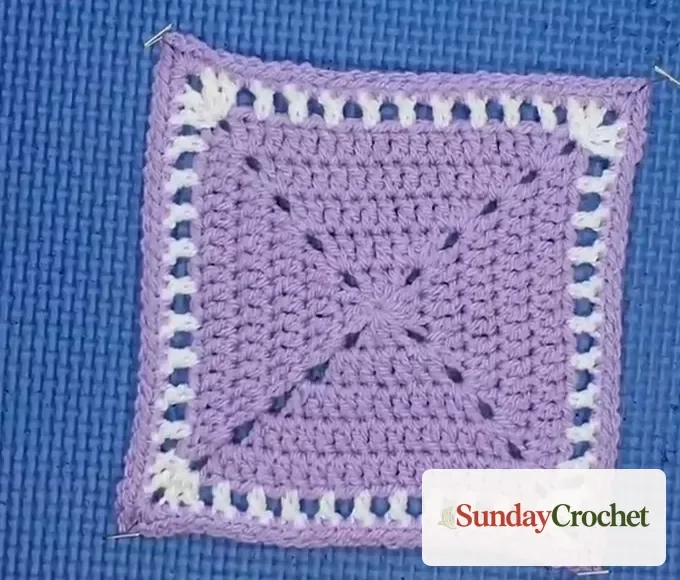
Once the corners are in place, add pins along the edges wherever they need support. Use enough to hold the outline you want, but do not pull the stitches far beyond their natural shape. Crochet has some give, and an aggressively stretched square may spring back or become distorted when released. Check the sides and corners by eye as well as with the tape measure.
Method 1: Wet blocking
Wet blocking begins by soaking the crochet so the fibers can relax. Place the item in a basin of water and let it soak for around 10 to 15 minutes. When it is fully wet, lift it out gently. Do not wring or twist it, because that can pull the fabric out of shape while it is saturated.
Lay the item on a towel, roll the towel around it, and press gently to remove excess water. The goal is to take out drips without crushing the crochet. Move the damp piece to your pinning surface, arrange it to the shape you want, and secure it with pins using the same measured approach as above.
Leave the piece in place until it is completely dry. A small square can still take several hours, and leaving it overnight gives it more time. Larger or thicker pieces may need longer, so check that the fabric is dry before removing the pins. Wet blocking is useful when you want to dampen the whole project, but it also means waiting for that moisture to evaporate.
Method 2: Spray blocking
For spray blocking, pin the crochet while it is dry and shape it on the mat first. Fill a clean spray bottle with water, then mist the project until the fabric is damp. You do not need to soak it. Make sure the area you want to shape has received some moisture, then leave the piece pinned until it dries completely.
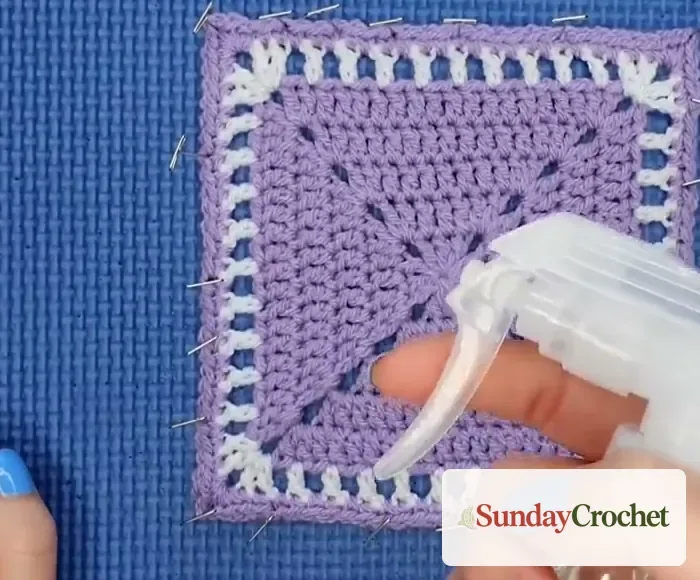
This method lets you add moisture only after the piece is arranged. The sample uses a square, but the same sequence is simple: pin, adjust, mist, and wait for it to dry. As with soaking, the mat and surface underneath may remain damp for a while, so leave the project somewhere it can dry undisturbed.
Method 3: Steam blocking
Steam blocking is the quickest of the three methods shown, but it needs the most care around heat. Pin the dry project into the shape you want first. Then use a garment steamer or a steam iron to direct a few puffs of steam over the crochet. Keep the hot appliance above the fabric. Do not let an iron's soleplate touch the yarn.
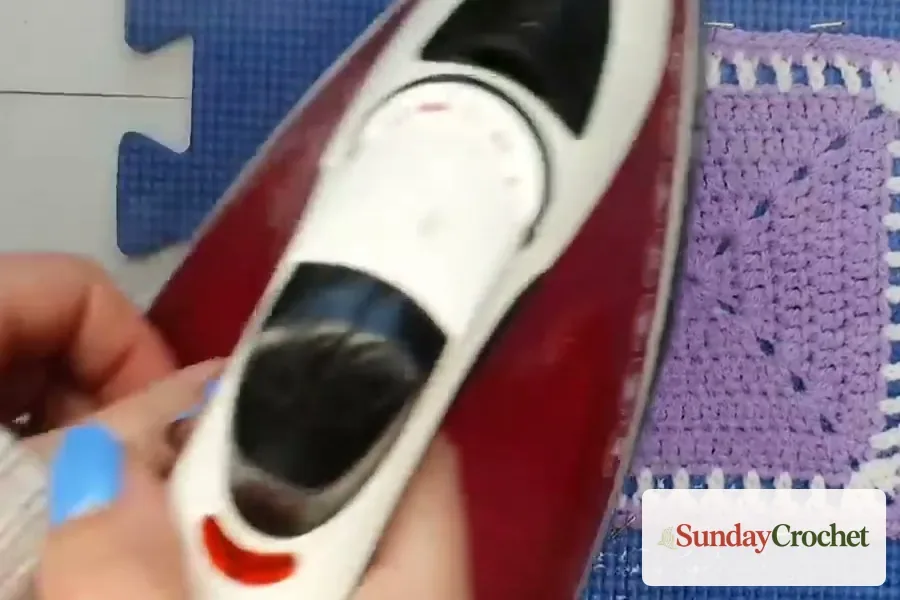
This warning matters especially for acrylic: too much heat can permanently change or set its texture. If you do not intend to permanently heat-set the fabric, use only a light amount of steam and avoid contact. The demonstrated square receives a few puffs rather than prolonged steaming. Follow your yarn's care guidance, and if you are unsure how a fiber will respond, do not assume steam is safe for it.
After steaming, leave the piece pinned while it cools and dries. Do not remove the pins while the fabric is warm or damp. Steam can be convenient, but it is not a method to rush through without checking the yarn and controlling the heat.
Let it dry, then unpin
Whichever moisture method you use, wait until the piece is fully dry before removing the pins. If you used steam, let it cool completely too. Take the pins out gently and check whether the shape has settled. A little relaxation can happen when the fabric is released. That does not mean blocking failed; fiber and method affect how firmly a shape holds.
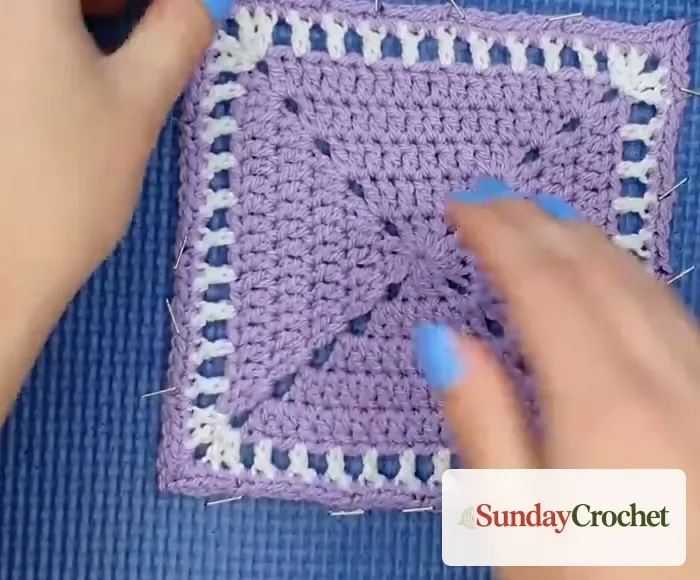
If an edge still needs a small adjustment, you can pin the project again and repeat an appropriate method. Do not compensate for a stubborn shape by pulling harder or applying more heat without considering the yarn. The aim is a tidier outline, not a stretched or flattened fabric.
Which blocking method should you choose?
Choose wet blocking when you want to saturate the whole item and can give it enough time to dry. Choose spray blocking when you want to dampen a pinned project in place without soaking it first. Steam blocking may take less time, but it introduces heat and can permanently alter some fibers if overheated. These approaches are not interchangeable for every yarn, so the fiber and care instructions should guide the decision.
For a set of granny squares, consistency matters more than chasing an exact measurement from someone else's sample. Use the same target dimensions for the motifs you plan to join, pin them with similar tension, and let them dry before comparing. For a shawl or lace motif, think about the outline and the stitch spaces you want to open. You can block only when a project benefits from the extra shaping.
Common questions
Do I have to block every crochet project?
No. Blocking is optional. It can help with shaping, stitch definition, or joining, but you can leave an item alone if it already looks and feels right to you.
How do I know if my granny square is square?
Pin the corners, check that the four sides look even, and compare the two diagonal measurements. The sample is about six inches per side, but your own pattern or project dimensions should determine your target.
Can I use regular sewing pins?
Use pins that will resist rust when exposed to moisture. Stainless-steel pins are a reliable choice for wet or spray blocking. The sample uses T-pins, which are easy to grasp and remove.
Can I iron acrylic crochet?
Do not press a hot iron directly onto acrylic. The guidance here is to hold a steam iron above the pinned work and use only a few puffs. Too much heat can permanently change the fabric, so check care guidance and proceed cautiously.
Will I have to block the project again after washing?
Possibly. Shape retention depends on the fiber and method, and some projects relax after washing. Acrylic that has been permanently heat-set is an exception described in this guide, but it is not a result to aim for unless you want that permanent change. If a washed item no longer lies as you like, you can decide whether it needs reshaping again.
A finishing step you can choose
Blocking is a useful finishing option, not a test every crochet piece has to pass. Pinning a square, checking its measurements, and allowing it to dry can make joining and shaping easier. Wet, spray, and steam methods all involve different amounts of moisture and heat, so choose with your fiber in mind. Start gently, keep the shape relaxed, and let the piece dry fully before you decide whether it needs another pass.