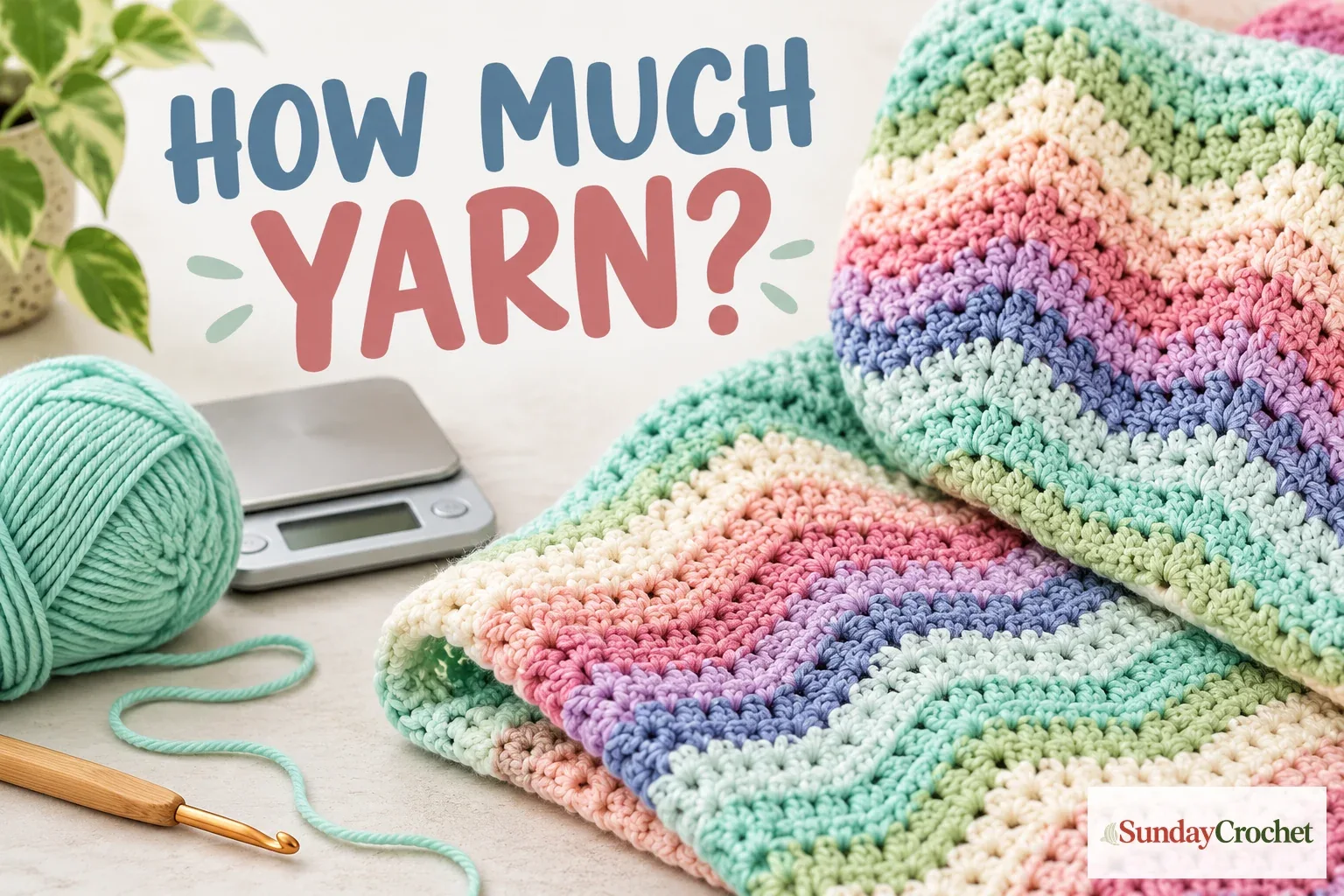
A representative swatch turns yarn planning into a practical estimate. · Sunday Crochet
In this article
01 · A practical way to estimate yarn02 · What you need03 · Estimate yarn in four steps04 · Convert grams into skeins05 · Estimate colorwork and repeating sections06 · If you want a simpler starting point07 · Make the estimate more dependable08 · Common questions09 · A useful estimate, not a guessA practical way to estimate yarn
If you have ever reached the middle of a blanket and wondered whether the last skein will stretch far enough, a small swatch can give you a useful estimate. Weigh a sample made in the same yarn and stitch, measure the area it covers, then compare that with the area of your planned project. The answer is an estimate rather than a guarantee, but it is far more useful than guessing from a photo.
I’ll show you the simple area method, including a worked 36 × 48 inch blanket calculation that comes to about 432 grams. You can use the same arithmetic for a rectangular shawl or other flat piece when the swatch represents the fabric you plan to make.
What you need
Gather the yarn and hook you intend to use, a ruler or measuring tape, a kitchen or craft scale that reads in grams, and a calculator or pencil. Make a small sample using the stitch pattern you plan to use for the main project. If your project has a border, textured section, or a second stitch pattern, keep in mind that those areas may use yarn at a different rate.
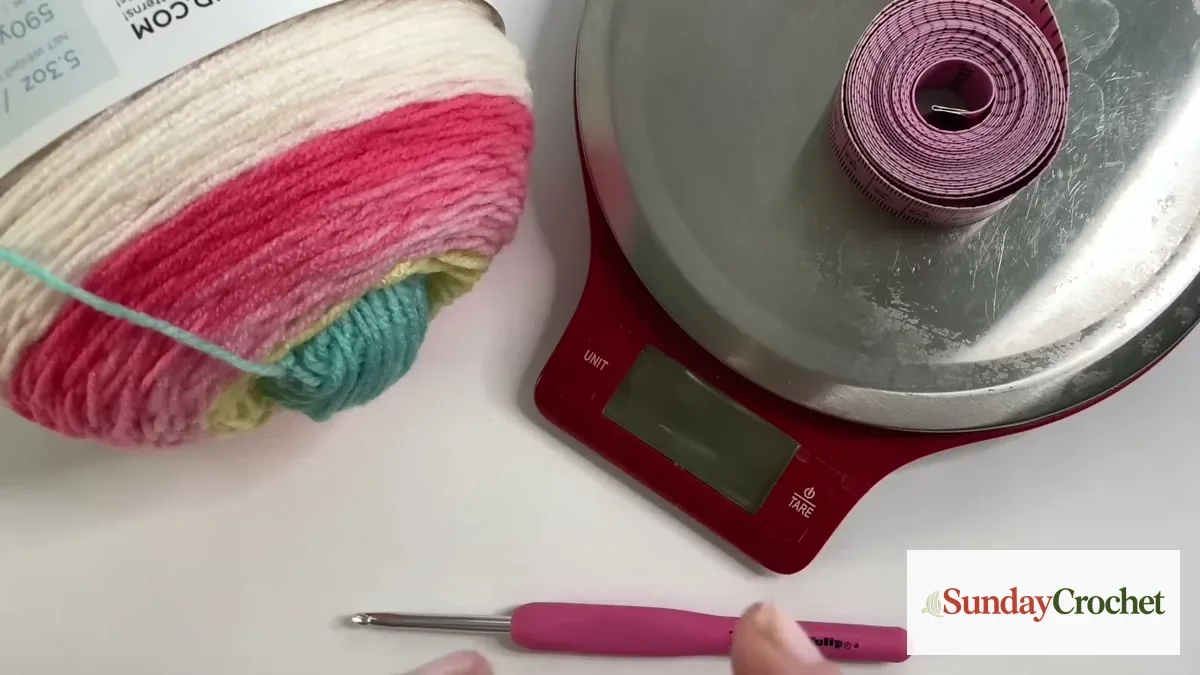
Use the same units for both measurements, either inches or centimetres. A ball band's weight is its mass; metres or yards tell you its length. The scale measures the sample, and the label helps convert the estimate into whole balls.
If you have not bought the exact yarn, use scrap yarn of the same weight and fiber type for your swatch. Check the planned yarn's product listing for its label details. The result remains an estimate because different yarns and personal tension affect how much yarn an area takes.
If you are still choosing a fiber, compare how cotton and acrylic yarn behave in crochet. A substitute yarn can change the fabric and its weight, so make your sample with the yarn you expect to use. Check the ball band for its weight and length as well, using the information explained in this guide to reading yarn labels.
Estimate yarn in four steps
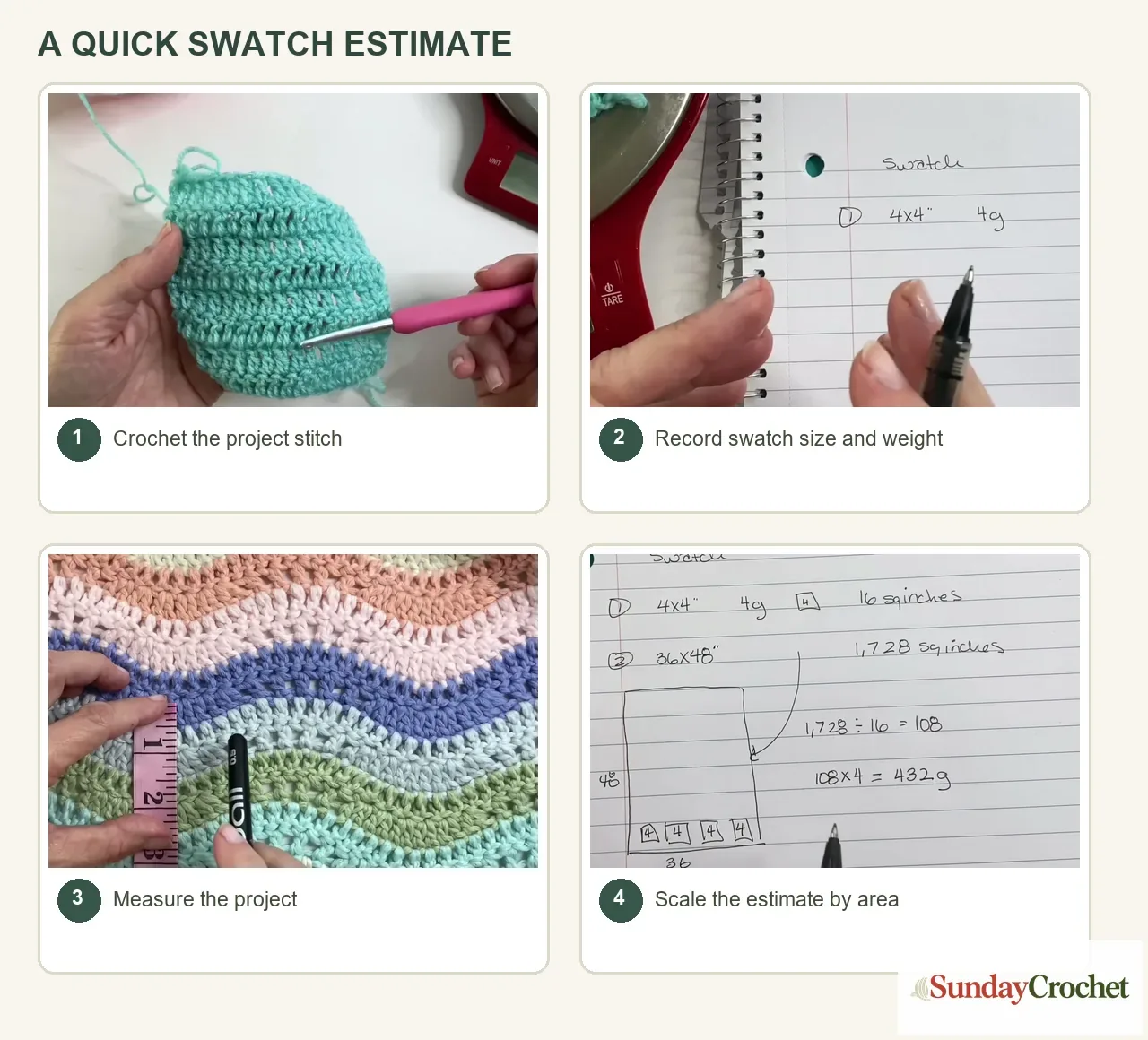
1. Make a representative swatch
Crochet a sample large enough to measure and weigh comfortably. A 4 × 4 inch square is a useful minimum for the worked method because it gives you a measurable area. Match the yarn, hook, stitch pattern, and general tension you expect in the project. A tiny sample can be distorted by its starting and finishing tails, while a larger sample gives you a more useful average. If you are estimating a blanket made with a repeating ripple stitch, make the sample in that ripple rather than substituting a dense single crochet square. If your project alternates stitches, work that same sequence into a square so the sample better represents the fabric.
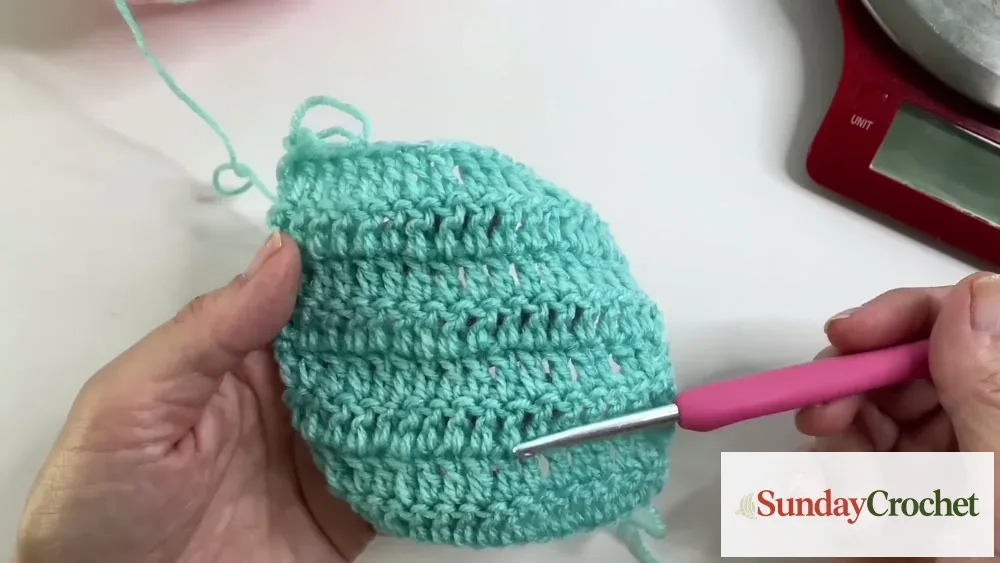
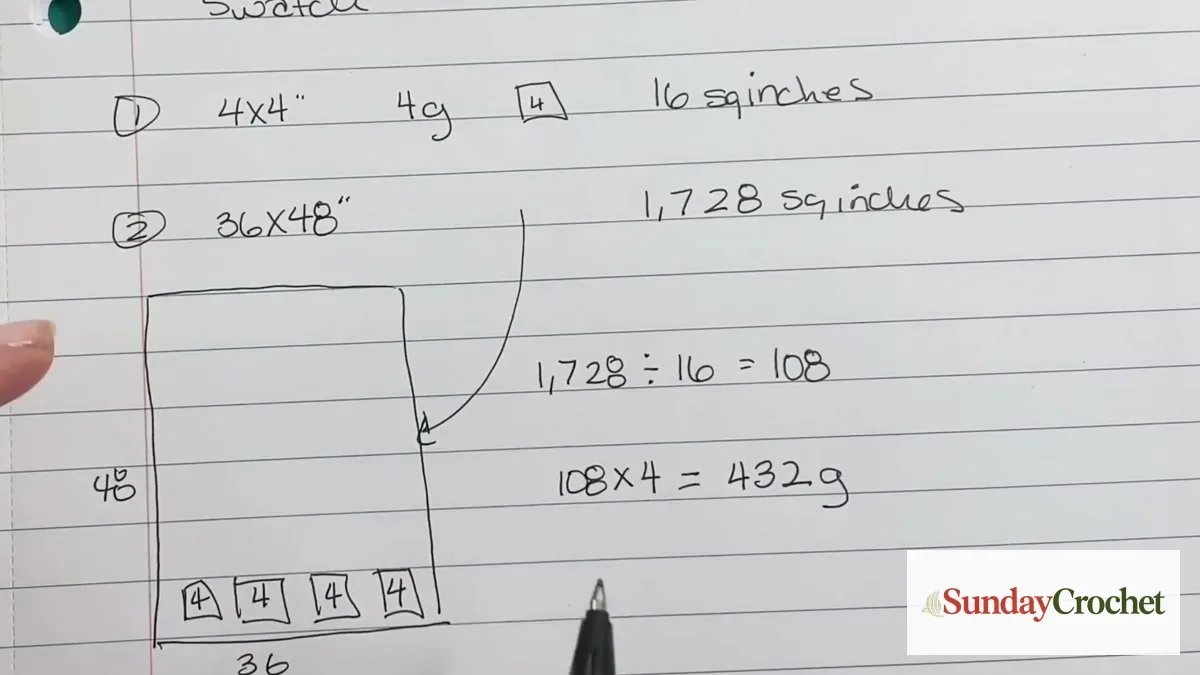
Lay the swatch flat without stretching it. Measure its width and height, and note both dimensions. For a square that measures 4 inches by 4 inches, multiply 4 by 4 to get 16 square inches of fabric. The project measurement and swatch measurement must describe the same kind of area. A 4 inch length is not the same thing as a 4 square inch swatch.
If the finished project will be washed or blocked before use, treat the sample the same way before measuring. This keeps your estimate aligned with the size the finished fabric is expected to have. Let it dry and settle flat before recording its dimensions.
2. Weigh the swatch
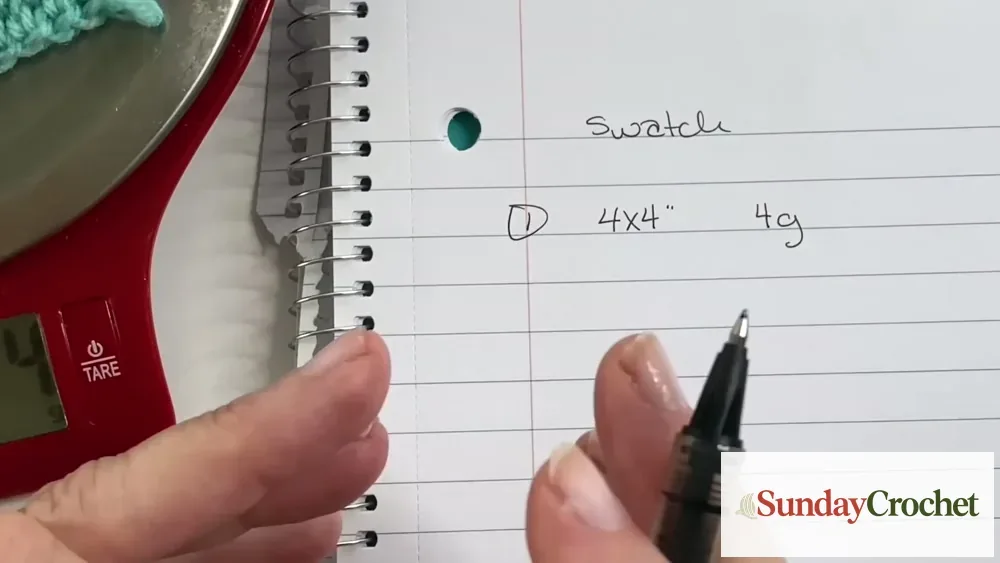
Set the scale on a level surface and check that it is using grams. If you place a dish or container on the scale, use its tare function first so the display counts only the yarn. Then place the swatch on the scale and write down the reading. A small scale can show decimal grams, but do not mistake extra decimal places for perfect accuracy. Differences in tension and measurement still matter.
Use the sample weight that belongs to the measured area. If you weigh a swatch and then trim or add yarn, weigh it again. Keep any tails consistent: either include them in both the measured sample weight and your calculations, or remove unusually long tails before weighing. The key is consistency, not a particular scale brand.
3. Measure the planned project
Measure the finished width and length you are aiming for. For a rectangular blanket that is 36 inches wide and 48 inches long, multiply those numbers: 36 × 48 = 1,728 square inches. If you are following a pattern with listed dimensions, use those. If you are choosing your own size, use the measurements you actually want rather than a vague label such as baby blanket or throw.
The same process can help with other projects, including scarves, hats, garments, and corner-to-corner blankets, as long as the swatch represents the fabric being made. For an irregular or shaped piece, an area estimate becomes less exact because the shape and stitch pattern may not use yarn evenly throughout. A garment with shaping or a project made from separate motifs may need separate estimates for its distinct sections. When a tested pattern gives a yarn amount for the size you want, use that as your starting point.
4. Scale the swatch weight by area
Divide the project area by the swatch area. This tells you how many swatch-sized areas fit into the planned piece. Multiply that number by the swatch weight to estimate the yarn for the project.
Here is the worked example:
- Swatch: 4 × 4 inches = 16 square inches
- Swatch weight: 4 grams
- Blanket: 36 × 48 inches = 1,728 square inches
- Project area ÷ swatch area: 1,728 ÷ 16 = 108
- Estimated yarn: 108 × 4 grams = 432 grams
So the simple area estimate is about 432 grams for that blanket fabric. The calculation assumes the larger piece uses the same yarn and a similar stitch density as the sample. It does not automatically include an added border, fringe, seams, or a different stitch section. Treat those as additional yarn needs rather than hiding them in a number that looks exact.
Convert grams into skeins
Look at the yarn label for the amount of yarn in each ball. In the 432 gram example, a label showing 150 grams per ball gives you this calculation: 432 ÷ 150 = 2.88 balls. Round up to three whole balls so you have at least the estimated amount. The leftover amount helps with finishing, but it is not a promise that every project will finish with the same amount left over.
When a pattern gives yardage or metres instead of grams, check the length printed on the label. For example, if a ball contains 200 metres and a pattern calls for 800 metres, 800 ÷ 200 = 4 balls before considering any size adjustment or extra trim. Do not compare grams from two yarns as though they contain the same length. A fluffy bulky yarn and a fine cotton can have very different metres per 100 grams.
If your project uses several colours, estimate the colors separately when the amounts are meaningfully different. A total of 432 grams cannot tell you how much of each stripe to buy. The method changes a little for granny squares, graph blankets, and rows of stripes because the amount of each color matters as much as the overall total.
Estimate colorwork and repeating sections
Granny squares and graph blankets
For a granny square that changes colour or stitch between rounds, use one square as your unit. Make a representative square in one solid color, using yarn of the same weight and fiber type as the project yarn. Weigh it, then work backward round by round. Pull out one round at a time and weigh the yarn you remove. If a tiny amount does not register on the scale, count that round as about one gram, as a practical minimum for the estimate. Repeat the process for the rounds you want to track.
Once you know an approximate amount per round or color, count how many squares your blanket needs and how many times each color appears. Multiply the amount used for one square's round by the number of matching rounds across your planned squares. This gives you a separate estimate for each color instead of one total that might leave you short of the color used most often.
For a graph blanket, count the blocks in each color on the chart. Weigh yarn for a representative block or block area, then compare that amount with the total number of blocks in that color. This is a planning estimate, so keep the block size and stitch pattern consistent with the piece you will make.
Stripes, ripples, and waves
When every stripe runs across the full width, make the swatch the same width as the project. For a 36 inch blanket, work a sample row that is 36 inches wide. A short sample across the width can tell you how much yarn one stripe takes more reliably than a small square, especially when the stitch forms waves or chevrons.
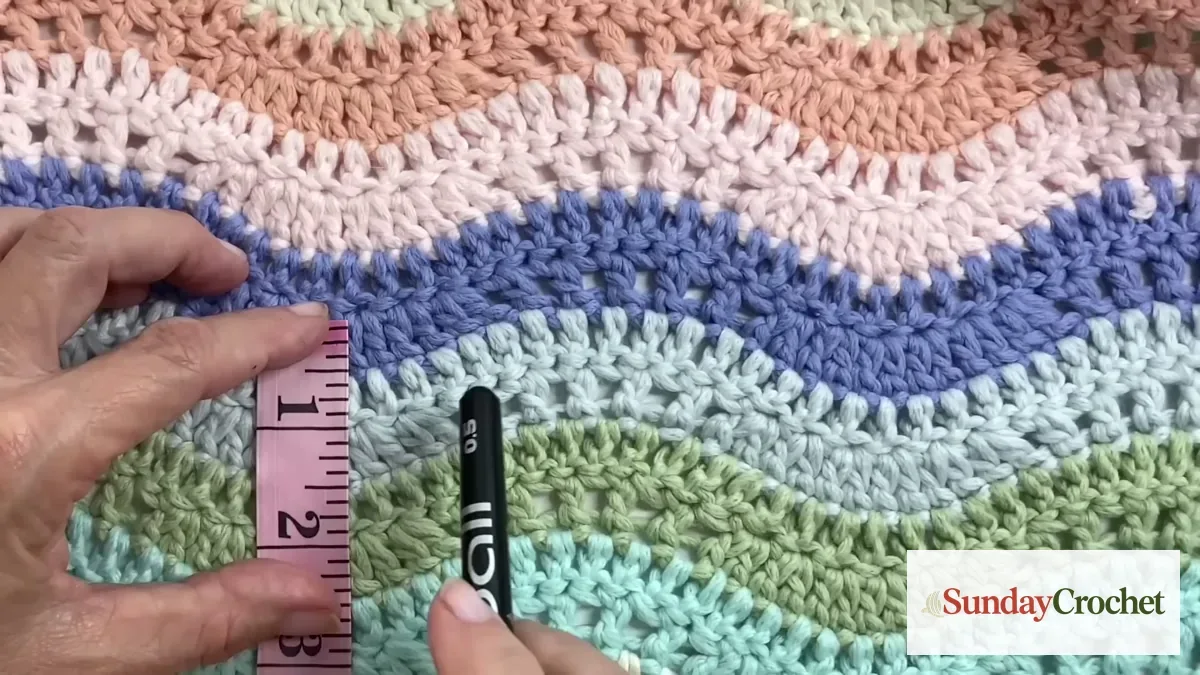
In one separate worked example, two rows across a 36 inch width weigh 20 grams. The ripple is a little less than two inches high, measured from its lowest point to its highest point. Rounding that stripe height up to 2 inches gives a simple estimate for a 48 inch blanket: 48 ÷ 2 = 24 stripe sections. At 20 grams for each section, 24 × 20 = 480 grams for the blanket. This is a different example from the 432 gram area calculation above.
For a ripple or chevron, measure from the lowest to highest point of the rows you are counting. Weigh the same color sequence you plan to repeat, then multiply by the number of matching sections in the finished length.
Corner-to-corner projects
The swatch method also works for corner-to-corner crochet. Make a small sample in the same construction you plan to use, around 4 × 4 inches or a little larger, then follow the same measure, weigh, and scale steps. If you are working traditional corner-to-corner or using a particular stitch, make the sample in that version so it represents the fabric.
If you want a simpler starting point
When you do not want to calculate a swatch estimate, look for a free pattern from a yarn maker or designer for a project with a similar size and construction. Compare its finished measurements, yarn weight, and stitch pattern with your own plan. It will not be a perfect match, but tested pattern yardage can give you a useful first shopping range.
Online yarn calculators are another starting point. Check what stitch they assume before trusting the result. Many are based on single crochet and ask for stitch and row counts. If your project uses a ripple, a larger stitch, or a different gauge, their default number may not describe your fabric. The swatch method is useful because it lets your own yarn and stitch density provide the input.
Make the estimate more dependable
Your estimate is only as representative as the swatch. A tighter sample uses more yarn per area; a looser one may make you underestimate. Measure it after it has relaxed or been finished the same way as your project.
Keep the stitch pattern consistent. Lace, cables, bobbles, and dense stitches use yarn at different rates. For a project with several textures, make a second sample or use a tested pattern's yardage as your main guide.
If you have a pattern for a similar item, its yarn amount is a better starting point than a broad size chart. For the same rectangular construction and stitch, compare the new width times length with the pattern area and apply that ratio to its yardage. Avoid scaling a shaped garment by width alone.
Common questions
How much yarn do I need for a crochet blanket?
There is no single amount for every blanket. Finished dimensions, yarn thickness, stitch pattern, hook, tension, and borders all affect use. A measured swatch gives you a project-specific estimate. If you have a tested blanket pattern in the same size and yarn weight, start with its listed yardage and buy enough balls to meet that length.
Can I estimate without weighing a swatch?
You can use a pattern's yardage or compare your project with one you have already made from the same yarn and stitch. Without a known yarn amount for a measured piece, though, you have less information for an area calculation. A small digital scale makes the estimate more concrete.
Should I add extra yarn?
The area formula is a base estimate for the measured fabric. Add separately for any border, fringe, seams, or extra length that is not represented by the swatch. If the project would be difficult to match later, buying the needed yarn together in the same dye lot is a practical way to avoid a color difference between batches.
How can I estimate each color in a striped blanket?
Make a sample across the same width as the blanket and weigh a representative stripe sequence, such as two rows in the colors you plan to use. Measure how much length that sequence covers, rounding sensibly for waves or chevrons, then divide the blanket length by that amount. Multiply the number of stripe sections by the weight of one sample sequence. If each color uses a different amount, track its share separately.
Does the same calculation work in centimetres?
Yes. Measure both swatch and project in centimetres, multiply each width by its height, divide the project area by the swatch area, and multiply by the swatch's gram weight. Keep one unit system throughout the calculation and do not mix inches with centimetres.
A useful estimate, not a guess
To estimate how much yarn a crochet project needs, make a representative swatch, measure its area, weigh it, and scale that weight to the finished dimensions. The example of a 4 × 4 inch swatch weighing 4 grams scales to about 432 grams for a 36 × 48 inch rectangle. Convert that base estimate with the grams or metres on your yarn label, then account separately for details the swatch did not include. A few notes and one small sample can make shopping calmer and help you avoid running short halfway through a project.