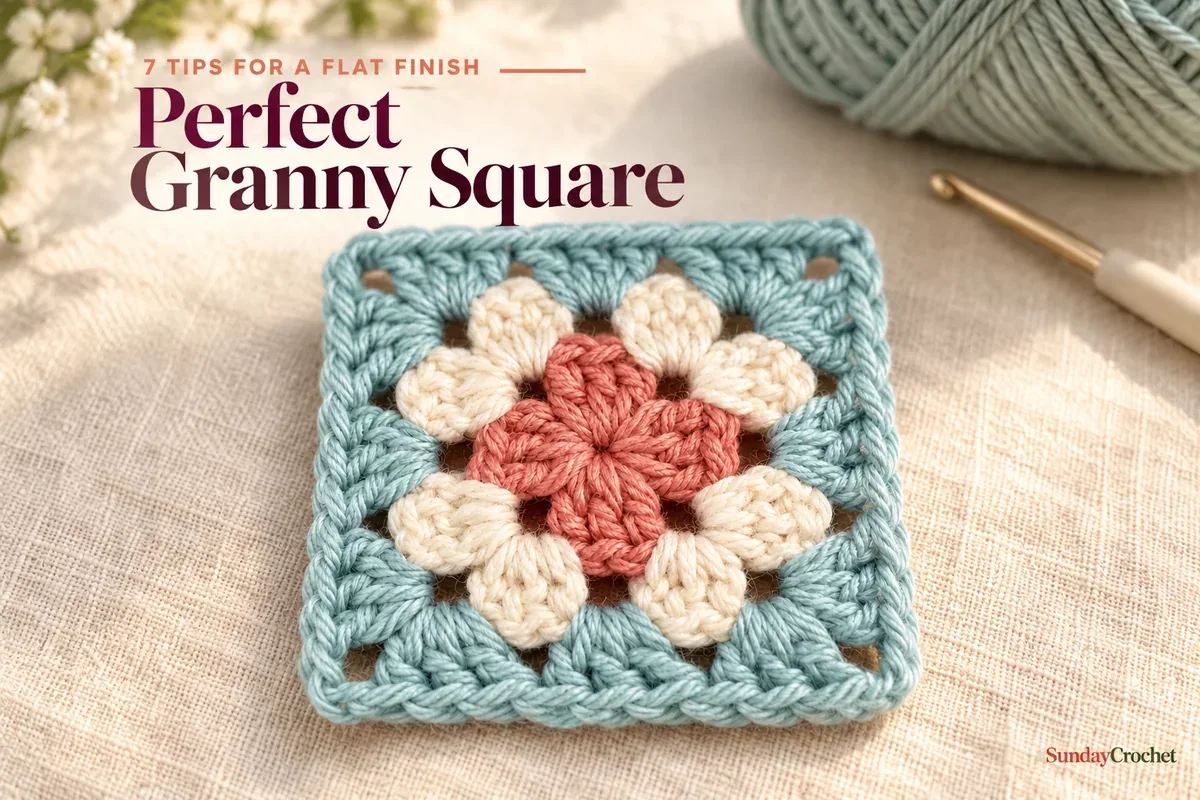
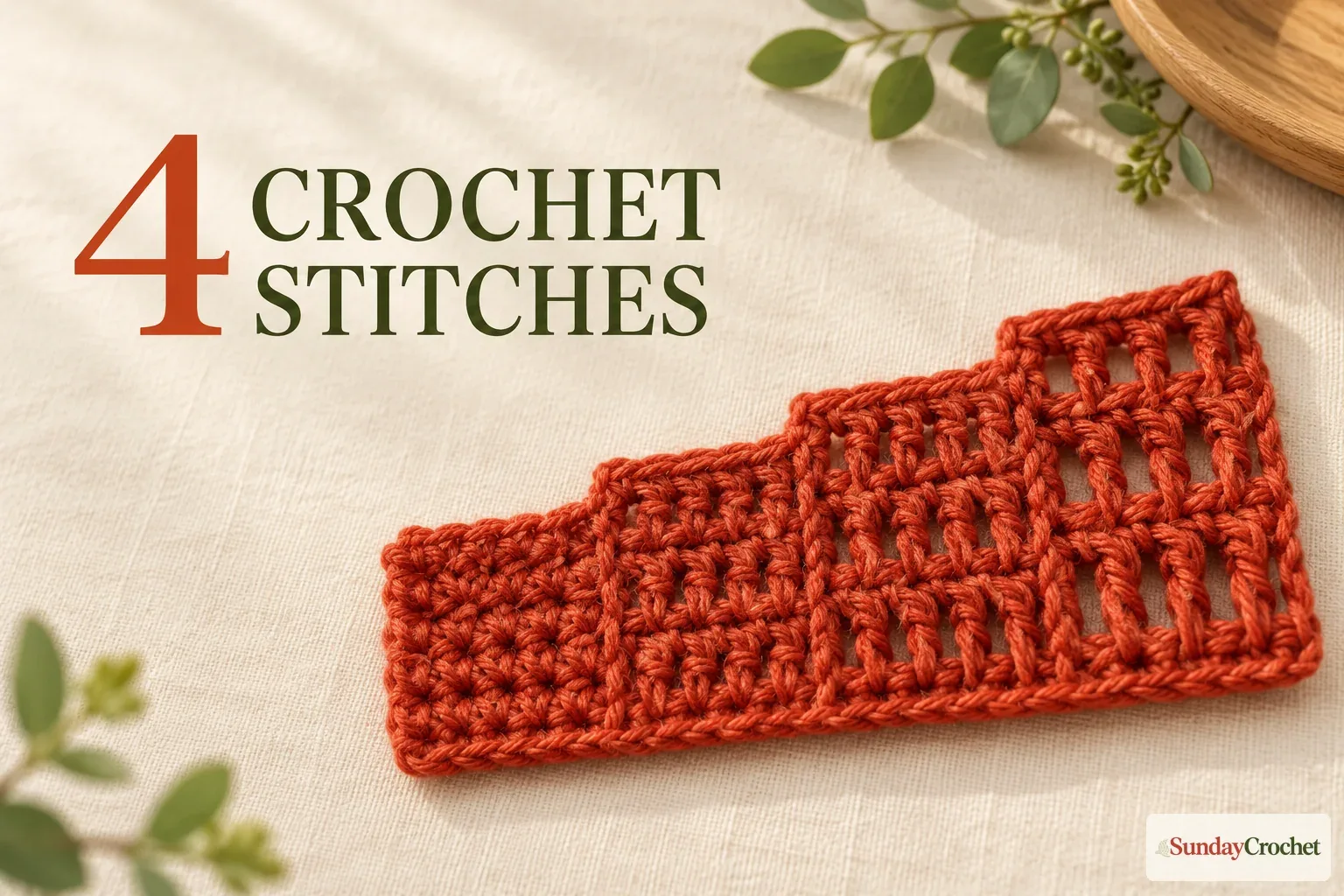
Four stitch heights, from compact single crochet to an open, tall stitch. · Sunday Crochet
In this article
01 · Four stitch heights at a glance02 · Know the stitch names first03 · Gather your yarn and make a sampler04 · 1. Work five single crochets05 · 2. Work five half double crochets06 · 3. Work five double crochets07 · 4. Work five triple crochets08 · Compare the fabric, not only the height09 · Common questions10 · A simple way to remember themFour stitch heights at a glance
If crochet patterns seem to switch between single, half double, double, and triple crochet without warning, the difference is easier to see than it is to memorize. Each stitch builds height in a slightly different way, which changes the fabric you make. A short sampler lets you compare the four side by side before you choose one for a larger project.
I’ll show you how I work a row of all four stitches, how to recognize each one, and what that change in height means for the fabric. These instructions use U.S. crochet terms.
Know the stitch names first
Crochet names can be confusing if a pattern comes from another country. In U.S. terms, the stitches in this guide are single crochet (sc), half double crochet (hdc), double crochet (dc), and triple crochet (tr). The last stitch is also commonly called treble crochet in U.S. patterns. In U.K. terminology, the same stitch names shift: a U.S. single crochet is called a double crochet, and a U.S. double crochet is called a treble. Check the pattern’s terminology note before you begin; the Craft Yarn Council’s U.S. and U.K. abbreviation guide shows the common equivalents.
The stitches also have a simple height progression. Single crochet is shortest and usually makes the most compact fabric. Half double adds a little height, double crochet adds more, and triple crochet is the tallest of these four. With the same yarn and hook, the taller stitches usually leave more visible space between the posts.
Gather your yarn and make a sampler
Choose a smooth yarn in a color that makes the loops easy to see, plus the hook recommended on its label. You will also want scissors. If you need a refresher on making the starting loop and chain, the basics are covered in this first-stitches practice guide. You can also compare yarn weights before choosing a practice yarn.
Make a slip knot, then chain 21. The final chain nearest the hook serves as the turning chain, leaving 20 chain stitches to work into. Skip that first chain and use the next 20 as four groups of five: five single crochets, five half double crochets, five double crochets, and five triple crochets. Working them all into one foundation row makes the height differences easy to compare without adding extra rows or changing yarn.
Keep your tension steady as you move from one group to the next. Try not to pull the taller stitches tight to make them look like the shorter ones. The point is to see the natural difference in height and spacing.
1. Work five single crochets
Insert your hook into the next chain after the skipped turning chain. Yarn over and pull a loop through the chain, so you have two loops on your hook. Yarn over once more and pull through both loops. That completes one single crochet. Repeat the same movement in each of the next four chains.
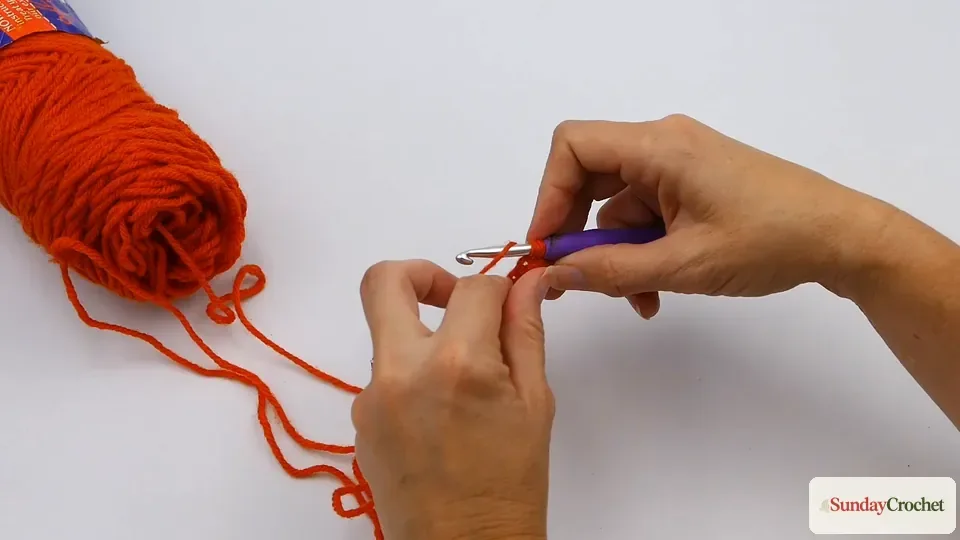
The single crochet has no preparatory yarn-over before you enter the chain. You pull through the chain once, then finish by drawing yarn through the two loops together. Look at the top edge after those five stitches: each stitch forms a small V, and the fabric below it is relatively short and dense.
2. Work five half double crochets
For the next five chains, yarn over before inserting your hook. Put the hook into the next chain, yarn over, and pull up a loop. There will be three loops on the hook. Yarn over again and pull through all three loops in one motion. That is one half double crochet. Repeat across the next four chains.
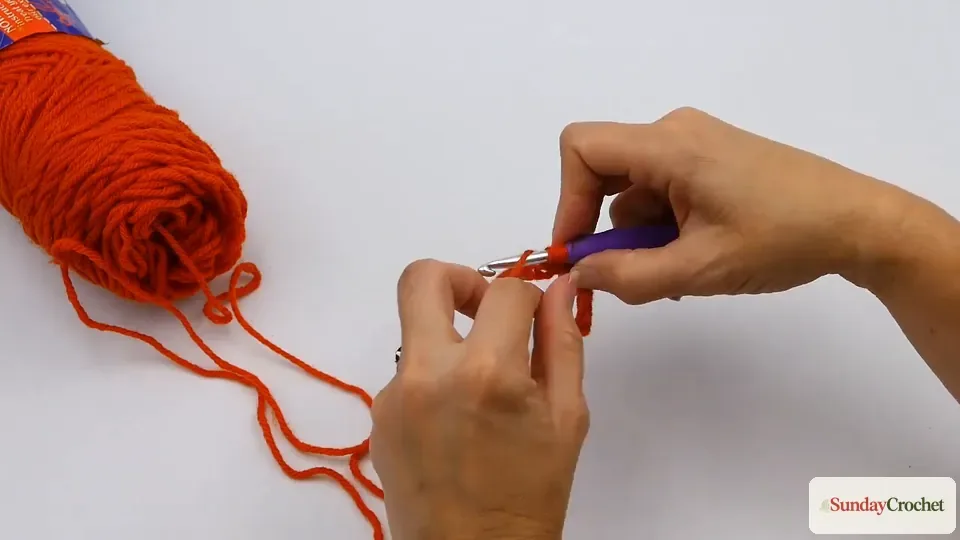
That last pull-through is the easiest feature to remember: all three loops leave the hook together. The stitch stands a little taller than a single crochet, but it remains fairly compact. In a longer row, that extra height can build fabric more quickly without opening the spaces as much as a double or triple crochet often does.
3. Work five double crochets
Yarn over once, insert the hook into the next chain, yarn over, and pull up a loop. You now have three loops on the hook. Yarn over and pull through the first two loops. Two loops remain. Yarn over again and pull through those last two loops. You have made one double crochet. Repeat that sequence in each of the next four chains.
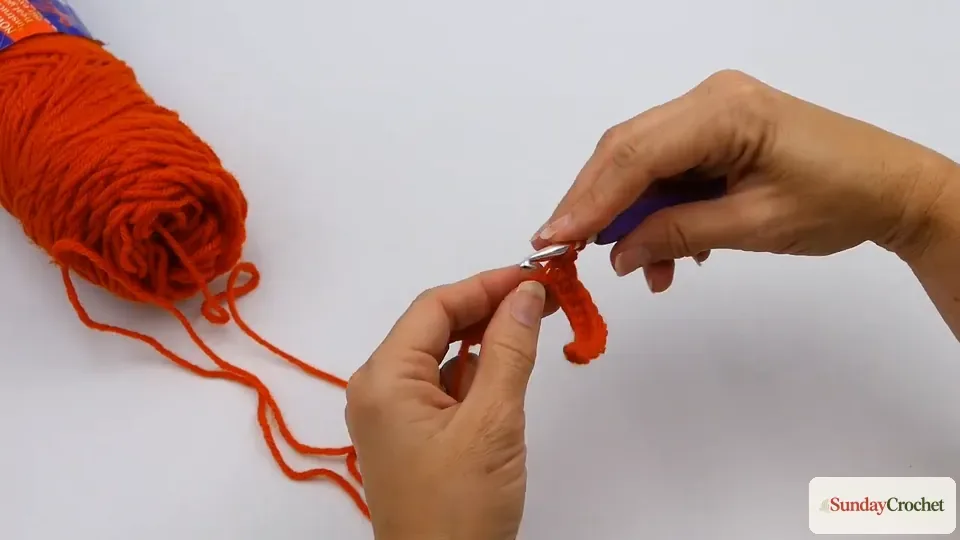
Unlike the half double crochet, a double crochet is completed in two pull-through stages after you pull up the first loop. You can see a taller post in the fabric, and the spaces between stitches become more visible. Keep the final two pull-throughs relaxed and even so the tops of the stitches sit at a similar height.
4. Work five triple crochets
For the final five chains, yarn over twice before inserting your hook. Insert into the next chain, yarn over, and pull up a loop. There are four loops on the hook. Yarn over and pull through two loops. Yarn over again and pull through the next two. Yarn over once more and pull through the final two loops. One loop remains on the hook, and the tall triple crochet is complete. Repeat in each of the last four chains.
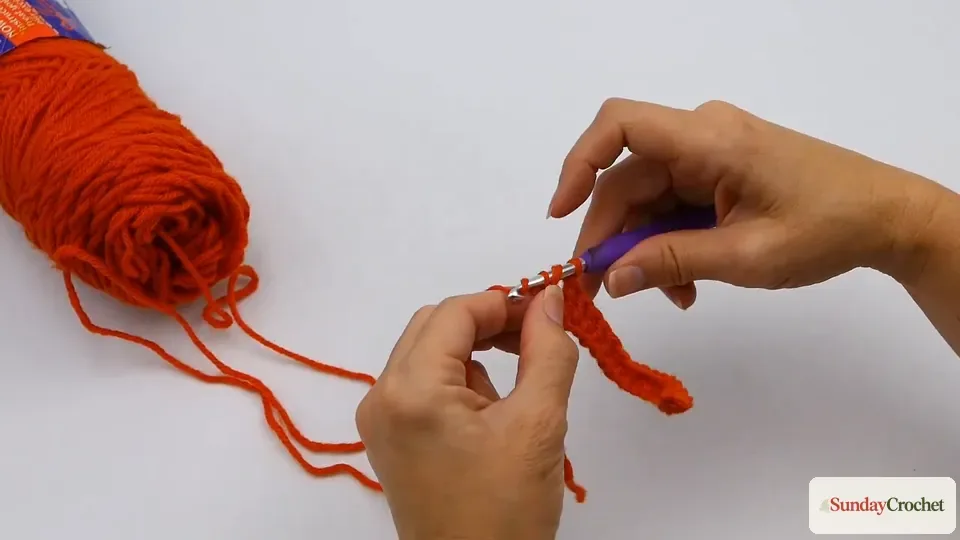
The stitch is worked off the hook in three pairs after you pull up the loop. Those extra stages create a taller post and a more open section. The U.S. treble or triple crochet uses two yarn overs before insertion; if a pattern’s special instructions define a different stitch, follow that pattern’s key.
Compare the fabric, not only the height
Lay the sampler flat and look across the four groups. You should see the posts climb gradually from single to triple crochet. The change is not only visual. It affects how firm, flexible, and open the fabric feels.
Single crochet is useful when you want a close, sturdy fabric that holds its shape. It can feel dense, so a project may grow more slowly in rows than one worked in a taller stitch. Half double crochet is a middle ground: it grows a little faster while still looking fairly solid. Double crochet creates more height and a looser structure. Triple crochet makes the tallest, most open section here, with more space showing between the posts.
These are tendencies, not guarantees. Yarn fiber, yarn thickness, hook size, and personal tension all change the final fabric. A loosely worked single crochet can have more gaps than a tightly worked double crochet. That is why the sampler is useful: it compares the stitches with the same yarn, hook, and hands.
Take a moment to compare the tops as well as the posts. Each stitch has a small V-shaped top where the next stitch would normally be worked. The taller stitches have longer posts beneath those tops, and the spaces between them are easier to see. In the sampler, all four groups share the same foundation chain, so you can compare their height without switching yarn or hook. Count five stitches in each group as you look across the row. If one group seems to blend into the next, trace the stitch tops from the foundation chain upward; the boundary is where the height changes.
This row is a visual practice piece rather than a finished-gauge swatch. Its purpose is to help your eye recognize the four stitch structures. A larger project can behave differently because the pattern, yarn, hook, and repeated rows all affect the fabric. Use the sample to recognize the stitch, then follow the project instructions for the correct size and tension.
Choose by the result you want. For a firm, less see-through fabric, begin with single crochet or half double crochet. For faster height and a softer drape, try double crochet. If you want a very airy fabric or a tall decorative stitch, the triple crochet may suit the job. When a project has a pattern, follow its stitch choice and gauge rather than swapping stitches without checking the finished measurements.
Common questions
Which stitch is easiest for a beginner?
Single crochet has the fewest steps, so it is often the easiest place to start after learning a chain. Half double crochet is also approachable once you are comfortable yarning over before insertion. The taller stitches simply add more loops and pull-throughs to keep track of.
Why does my half double crochet look like a single crochet?
Check that you yarn over before inserting the hook, then pull through all three loops together at the end. If you skip the first yarn-over, the result will be shorter. If you pull through in separate pairs, you are using a different stitch sequence.
Why are there gaps between my double or triple crochets?
The taller posts naturally leave more open space than short stitches, especially when the fabric is not blocked or the tension is loose. Keep the yarn-over and pull-through tension consistent, and check the pattern’s recommended hook and gauge. A larger hook can make spaces more pronounced.
Do I chain the same number when I turn every row?
No. Turning-chain directions depend on the stitch and the pattern’s method for counting that chain. This sampler is worked across one foundation row, so it does not need row-by-row turning instructions. When you move to a multi-row project, use the turning chain specified by that pattern and keep your edge stitches consistent.
Is triple crochet the same as treble crochet?
In many U.S. patterns, yes. The Craft Yarn Council lists “tr” for treble crochet, and the Crochet Guild of America presents the same tall stitch as triple crochet. U.K. names use a different height scale, so check the abbreviation key rather than relying on the name alone.
A simple way to remember them
Think of the four stitches as a ladder. Single crochet is compact, half double adds a little height, double adds more, and triple makes the tallest, airiest section. Make the small sampler once, and you can see exactly how the yarn-over and pull-through sequence changes the fabric. When you meet the abbreviations in a pattern, you will have a practical sample to compare against instead of guessing from the name.